

Review: 'The Summer Boy' by Philippe Besson
The cost of looking back

The Summer Boy, translated from the French by Sam Taylor, forces an uneasy confrontation with the consequence of memory, as well as the impulse to give it form.
The story begins with a direct address to the reader, one that carries an early portent of the tragedy to come. That sense of inevitability frames everything that follows, and with the novel’s greatest appeal lying in its grounding in the author’s youth, there’s very little room for pretense.
In many ways, we expect memory’s falsehoods to steer the narrative down perpetual cul-de-sacs.
This expectation is immediately borne out in the novel’s opening scenes, which carry the same touch of hopeful recognition that frames Lie With Me (2017) before the familiar stab of wounded dismay sets in.
From there, Besson moves outward, alternating between the immediacy of present-tense immersion and the sweeping voice of retrospective contemplation. This, in turn, creates the sense of a narrator caught between reliving an experience and attempting to contain it.
Youth, he observes, is ruled by hormones, impulses, and untested freedoms; adulthood, by contrast, is a stilled body and a life fitted around expectation. At times, this contrast heightens our sense of anticipation, giving weight to the uneasy feeling that the central tragedy’s developments have already been set in motion.
At others, it reads more like a wayward distancing, a form of generational commentary that can’t help but flatten the richness of lived experience into clinical observation in service of the speaker’s protestations.
This is felt most keenly when the present is repeatedly depreciated by its communion with technology and distance from the author’s lived point of reference.
That said, Besson’s linguistic minimalism is elegantly precise and unsentimental. The prose’s resistance to reduction through compression can also likely be attributed to Taylor’s nimble translation.
Together, they handle the body with the same economy, stripping and assessing it through sparse recollection. In this register, the skin’s pores and responses are noted rather than savored in a way that speaks credibly to time’s dulling of both longing and impulse.
But dialogue, when it surfaces, carries a strange, self-conscious plasticity. At its most artificial—specifically in the interrogation scene, which forces the protagonists past the final point of naïveté—speech becomes exact and protracted, as if memory were tasked with filling in reality’s opacity with glaring certainty.
In this way, no part of the story is allowed to rest in a shadowed state without being deeply resented for it. The world remains self-consciously poised on the page, completely aware of itself as it awaits being encountered rather than merely considered.
Elsewhere, romantic rivalry is teased and goaded but quickly divested of its guise, serving largely as a source of strain that’s pushed past its limits by fiction’s demand for narrative suspense.
Perhaps the implied intimidation would feel truer if the dynamics among the teen ensemble weren’t quite so fragile. As things stand, their connections are too fresh and undeveloped to bear the weight of meaningful attachment.
This leaves us with identities imposed by projection, wishful thinking, or hazy recollection—distortions forged by the same tension between immediacy and retrospection the rest of the novel leans on, and which in turn renders these connections uncomfortably manufactured.
This instability of projection isn’t confined to relationships alone. The present-tense narrative is continually refracted through the lens of an adult mind, with the distance between the two perspectives undercutting the urgency of Besson’s account.
The world of youth, vivid with boredom but also immeasurable potential, becomes a seemingly gauged landscape in which fear itself is cataloged as abstract, and therefore foreign. But there’s also a reluctant elasticity there, a suggestion of lives and sensations too vast to be fully contained by memory or language.
Hints of this come from the more labored, mature side of the speaker’s consciousness, laying bare the therapeutic significance of the text. But while understandable as an impulse toward closure, this forced intimacy inevitably distances both the author and us from the memory that’s been thinned across the bones of time and consequence.
By the novel’s close, there’s no story as such to resolve, no arc to follow to ground our knee-jerk formation of expectations. Instead, we’re endowed with the remains of a summer past: those ghostly spaces where anticipation, wonder, and disappointment refuse to part.
There’s also the uneasy understanding that our own perception of lived moments is always already filtered, reshaped, and reframed.
And so, The Summer Boy dramatizes more than observes, rehearsing the present’s plunge into the past’s dim, reflective waters. The emotion this evokes may sit uncomfortably close to disillusionment for some, especially with one’s own hopeless longing for the unambiguous.
An advance copy was provided by Scribner.
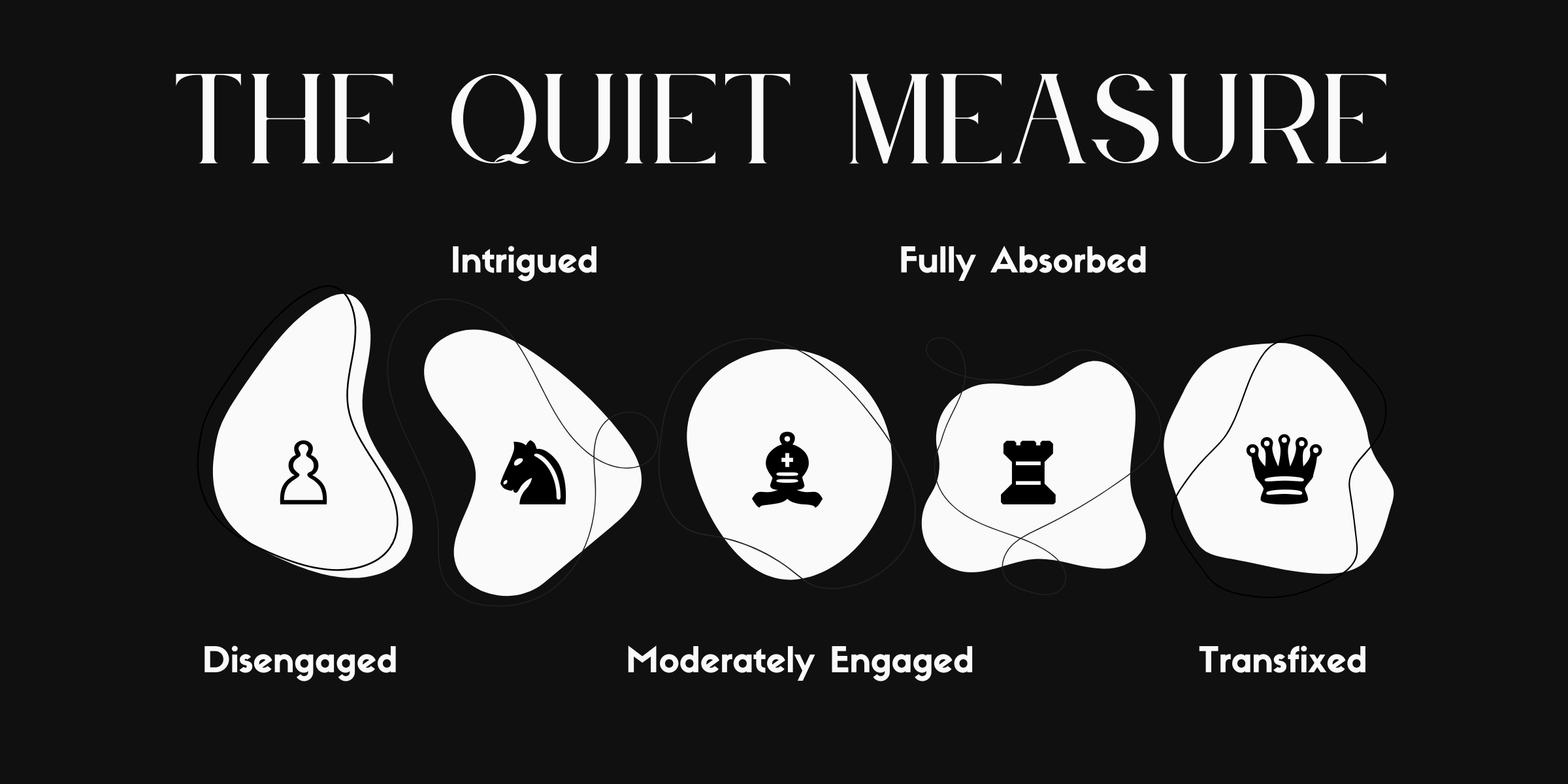
Path of Engagement
♝♞♙♞♙
Genres
New Adult | LGBTQ+
Publication Date
May 26, 2026