

Review: 'The Seduction' by Sara Torres
Desire in reverse
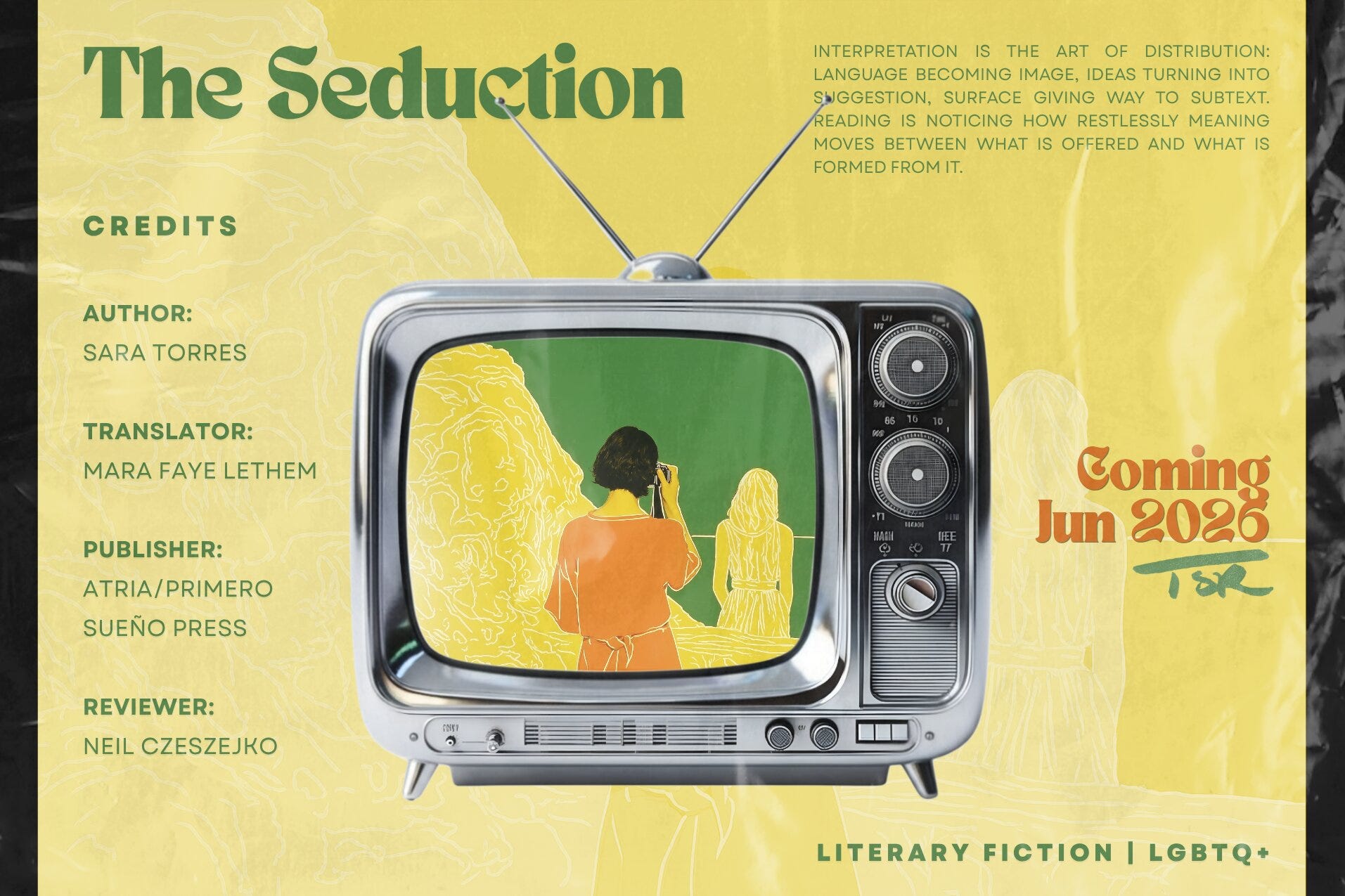
The Seduction, a sapphic novel translated from the Spanish by Mara Faye Lethem, follows the prurient obsession of a thirty-something photographer with a writer in her fifties, a desire both reciprocated and held in restless stasis.
Fittingly, the novel opens with an immediate stratification of focus: there’s the landscape rushing past a train window on one side, a self frozen within desire’s photographed frame on the other.
A few staccato sentences convey compression, a sort of yielding to the spatial demands of a closeness that’s never quite consolidated. Here, the prose seems to strive toward the act of seduction itself, moving in and withdrawing breath through syntax pared to a sharp inhale.
In true poetic fashion, Torres’ language requires us to give something of ourselves to register its effects. The interplay of present and future tenses heightens this sense of undoing, lending the prose a dreamlike quality. Seduction’s tracks begin to shift askew, like a skirt zipped up at the hip in rushed asymmetry.
And yet, what the novel performs isn’t, strictly speaking, desire.
The speaker’s body, enthralled by others’ performance of femininity but averse to its inward machinations, seems to peel away from the mind and its circling thoughts, creating an imbalance between tactility and rumination.
In turn, the central infatuation begins to feel distractedly self-consuming, like someone gnawing at the skin of their arm in fruitless but deepening absorption. Much of the disconnect seems to stem from the writer being repeatedly deidealized aesthetically.
Without the intensity of passion or friendship, the process of projection lends the speaker’s lust a somewhat clinical edge, inevitably recasting it as something closer to fancy than true desire: disembodied, petulant, and driven by a sense of unfulfillment.
This cumulative detachment leaves The Seduction appearing more interested in the idea of satiation than true wanting—nowhere more so than in its treatment of mother–daughter dynamics, literal hunger, the body’s discomforts, and youthful impatience.
In other words, the wanting is less erotic than it is structural, and not at all confined to the speaker’s sexual fixation. At the root of this distancing is an intellectualization of seduction itself, and it’s here that the novel’s ambitions and limitations meet.
Torres is clearly in conversation with Jeanette Winterson and, more explicitly, Roland Barthes, citing A Lover’s Discourse: Fragments (1977) as a touchstone. Hence the author’s insistence on pushing theory toward feeling, and abstraction’s compulsion to twist itself sensate.
But where Barthes’ intellectualization of sentiment is grounded in the nonfiction format, Torres’ chosen framing depends heavily on emotion to carry us from one page to the next.
And while feeling can sit beside mental abstraction for a stretch, it can’t afford to lose itself to it completely without losing us as well.
This brings us to the main issue: at its core, The Seduction aspires toward an ideal of completeness that dislocates desire from the body. In doing so, it also distances the body from the idea of a relationship that can hold its shape—an admirable pursuit, though one that inevitably estranges sensation from sentiment.
Torres’ approach certainly allows the novel to engage with heavier themes, such as motherhood’s waywardness and the burdens of the cisgender female body, but it also leaves its central ideas detached from the bones of the plot in a way that renders the characters fleshless.
The result is, naturally, something far too reticent for a work with “seduction” in its name.
Ultimately, the novel isn’t without its appeal, however elusive it may prove, and the narrative is nothing if not nonconformist in its recognition of the strains that keep mind and body separate. Whether it manages to hold the reader is another matter entirely.
An advance copy was provided by Atria/Primero Sueño Press.
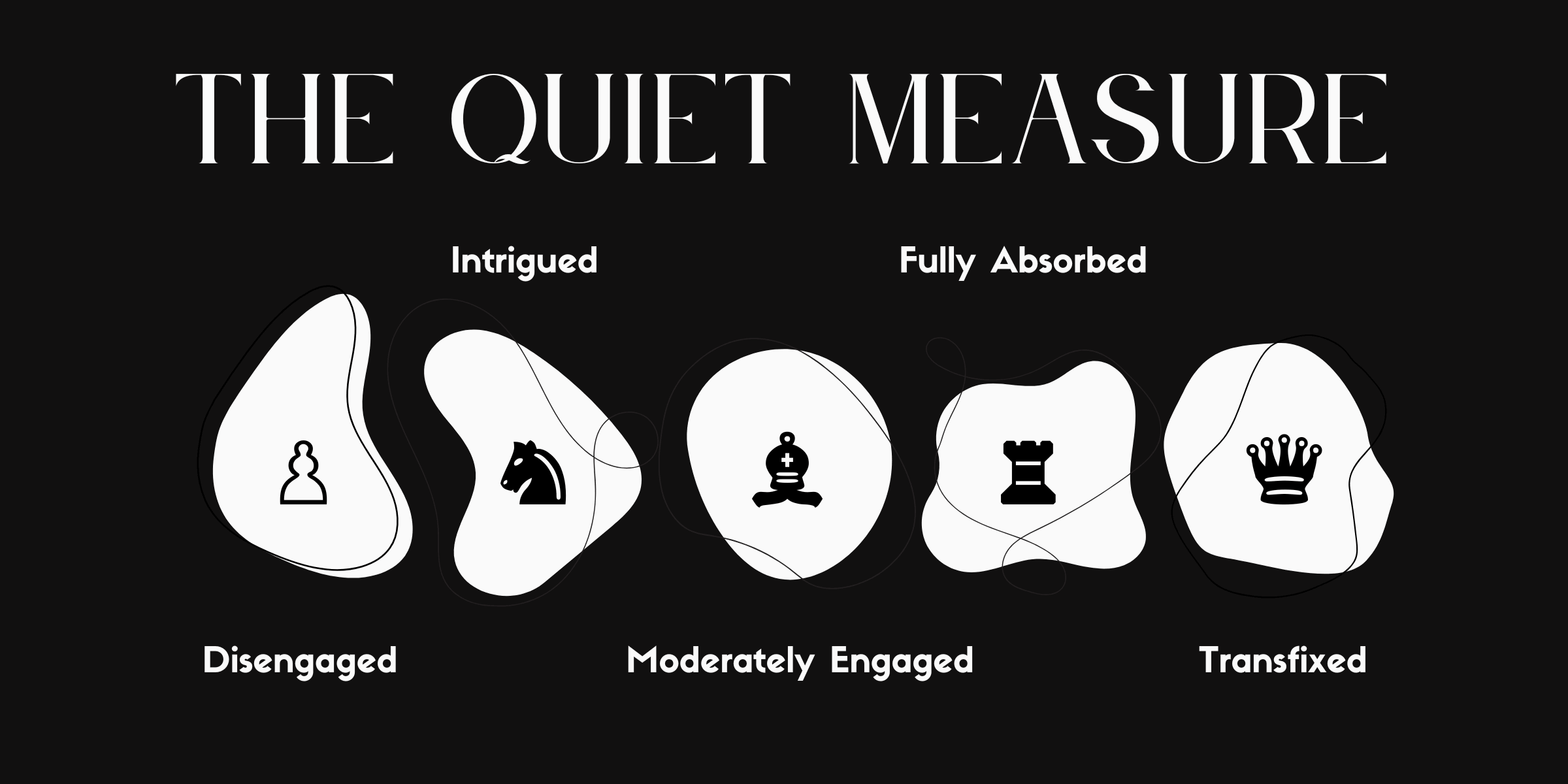
Path of Engagement
♝♞♙♞♙
Genres
Literary Fiction | LGBTQ+
Publication Date
June 2, 2026