

Review: 'The Living Realm' by Jordan Tannahill
Bodies out of sequence
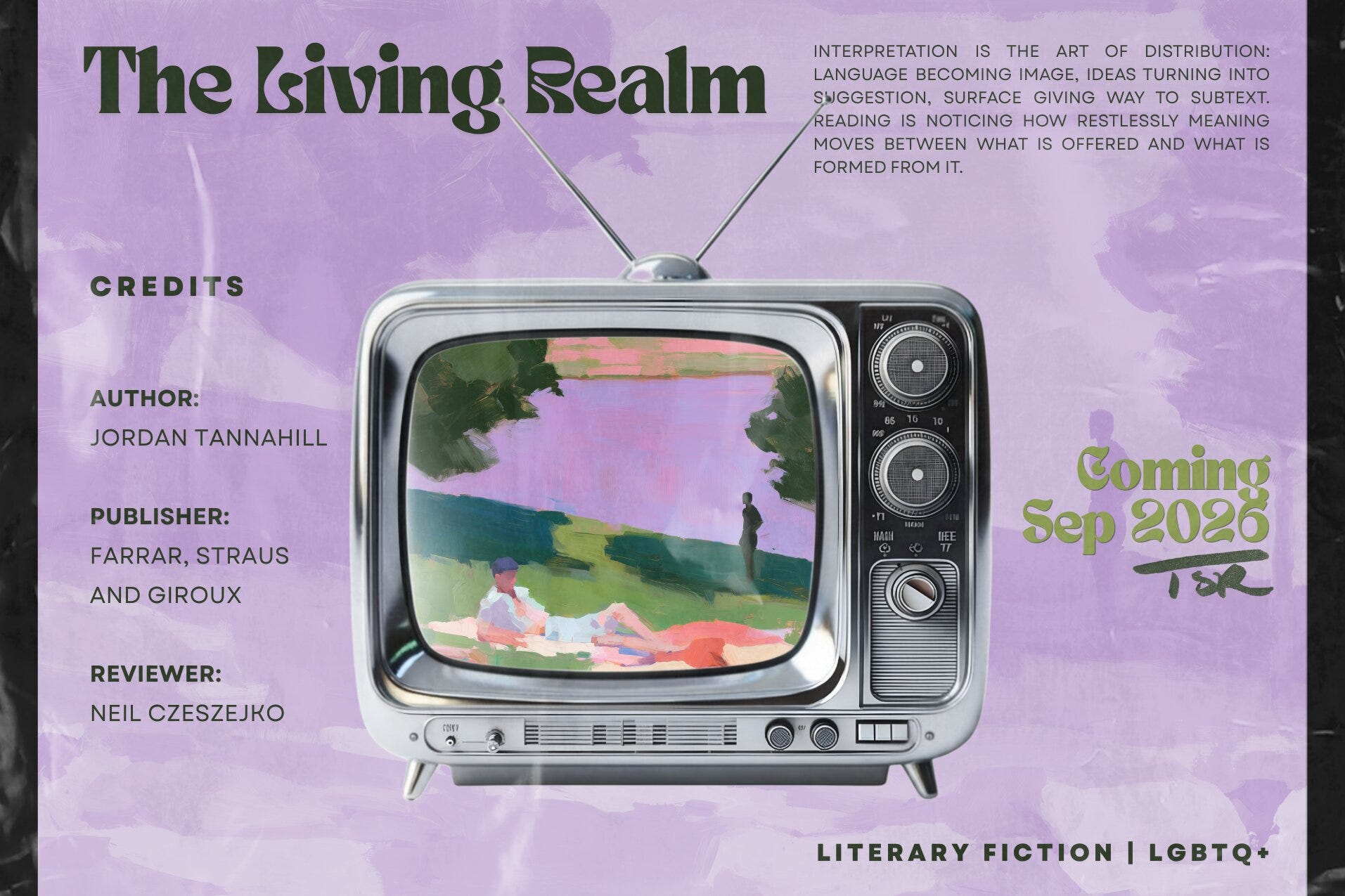
Tannahill’s The Living Realm opens amid a sweltering Berlin drought, with the lake Teufelssee presented as a haven distended under both heat and memory.
From the brilliance of its waters, we pivot—rather abruptly—to the delicate art of fisting, taught by the narrator’s female friend across the city’s gay bars and bathhouses at the height of the AIDS epidemic.
While somewhat concussive, this tonal swerve immediately draws us into the work’s central mode of being: humor made to collide with the unbudging bearing of the mundane.
It certainly helps that the Freitags Fisting Club, as it’s aptly named, manages to draw in unsuspecting audiences through the word’s semantic ambiguity. While the effect may vary from reader to reader, its deflation of the work’s initial gravitas is likely to charm most within the first few pages.
Still, Tannahill doesn’t appear to be leaning on humor as ornament. Less concerned with the mechanics of sex itself, he traces the ways pleasure adapts to threats, and how it’s forced to find new routes through a world suddenly made hostile to the body.
The narrative proper begins some thirty years later.
Here, too, sex and pleasure are a constant sheen on the skin, as elemental as the minerals found in sweat. Within Teufelssee’s wilderness, sunbathing and late-night strolls drift into cruising. Sex and the curious sexlessness of nudist beaches intermingle. Bodies meet, separate, and gather again.
The effect is sleepy, maybe even sultry, but far from sluggish. And as the narrator is increasingly poised between the past and present—now that retirement has made space for thoughts’ errant ways—we watch people going about the daily business of being alive through the small pleasures afforded to them.
And perhaps this is where the novel’s deeper unease begins to emerge.
The setting never eases its hold on the narrative, with the friction between the pitiless heat and the wet belly of the lake lending the latter a curious sense of corporeality.
In fact, Teufelssee feels less like a setting than a body of its own, with the narrator even dreaming of being sensed by it at one point. And while the moment inevitably passes, the sensation gains its own distinct pressure.
Strangely, despite the novel’s focus on time and bodily experience, death remains mostly elusive at first. Once it surfaces, it takes on the anguished memory of lovers—and one lover in particular—lost to AIDS, as well as the accumulated weight of Berlin itself.
Here, the author foregrounds the setting in interesting ways.
In a city so saturated with history, war can never fully retreat into absence, serving as a reminder of suffering’s strange dislocation from time. It makes sense, then, that the past isn’t content to remain in the past.
Neither, it seems, do the dead.
As the protagonist begins running into former lovers around the lake, the novel enters its most overtly uncanny territory, though the effect feels more inevitable than startling.
Through Tannahill’s weaving of the narrative, time has already made itself porous enough to suspend disbelief. The living and the dead naturally occupy adjacent spaces, with memory and presence seeping into each other—even going as far as to blur our image of death, understood as the final disembodiment.
The reality pushed onto the narrator’s encounters does hinder the reading pace at times, especially given how forcefully his friends’ reactions pull the story back into an enclosure of the familiar and intelligible.
This leaves the novel swaying between revelation and fear, acknowledging both reality’s grounding in presence and wonder’s utter indifference to it.
That said, we do manage to find our way back to more pressing matters. Where does the body store all the unfinished lives it was once privy to? How does the tongue move once the languages of skin it was once fluent in have become extinct?
Questions like these seem to haunt The Living Realm more wholly than its ghosts.
And as the story ripples outward, it begins to reach for the shores of broader concerns, fascism among them. This farsightedness lends the narrative a certain corpulence, with its many subjects threatening to crowd one another as personal narratives are gradually eroded.
Individual voices do occasionally begin to blur, becoming slightly disembodied within larger currents of communal hardship, but never enough to unsettle the central friend group’s satisfying—and entirely justifiable—personability.
But through all the plot developments, the story’s peculiar relationship with time remains its most distinguishable facet.
The present moment often feels forceful enough to pull the past into itself, and the future seems already present, and therefore already gone. At the same time, knowing and unknowing circle each other restlessly.
Even the syntax is coaxed into participating in this penetrability, with the ending’s run-on sentences slipping into brief streams of consciousness that evoke both orgasm and death.
By the novel’s climax, these two experiences feel decidedly less like metaphors for each other than the same destination approached from different directions, leaving us duly reoriented.
It follows, then, that in its final moments, The Living Realm seems to embody the fragile boundaries separating love from withdrawal, joy from death, the self from the other, and the present from the eternal.
Beneath this, in its drought, aches, penetrations, and long summer days, lies a heady release marked by muted build-up: the suspicion that nothing we’ve ever truly loved leaves us entirely, and that the body holds onto far more than it’s made to renounce.
An advance copy was provided by Farrar, Straus and Giroux.
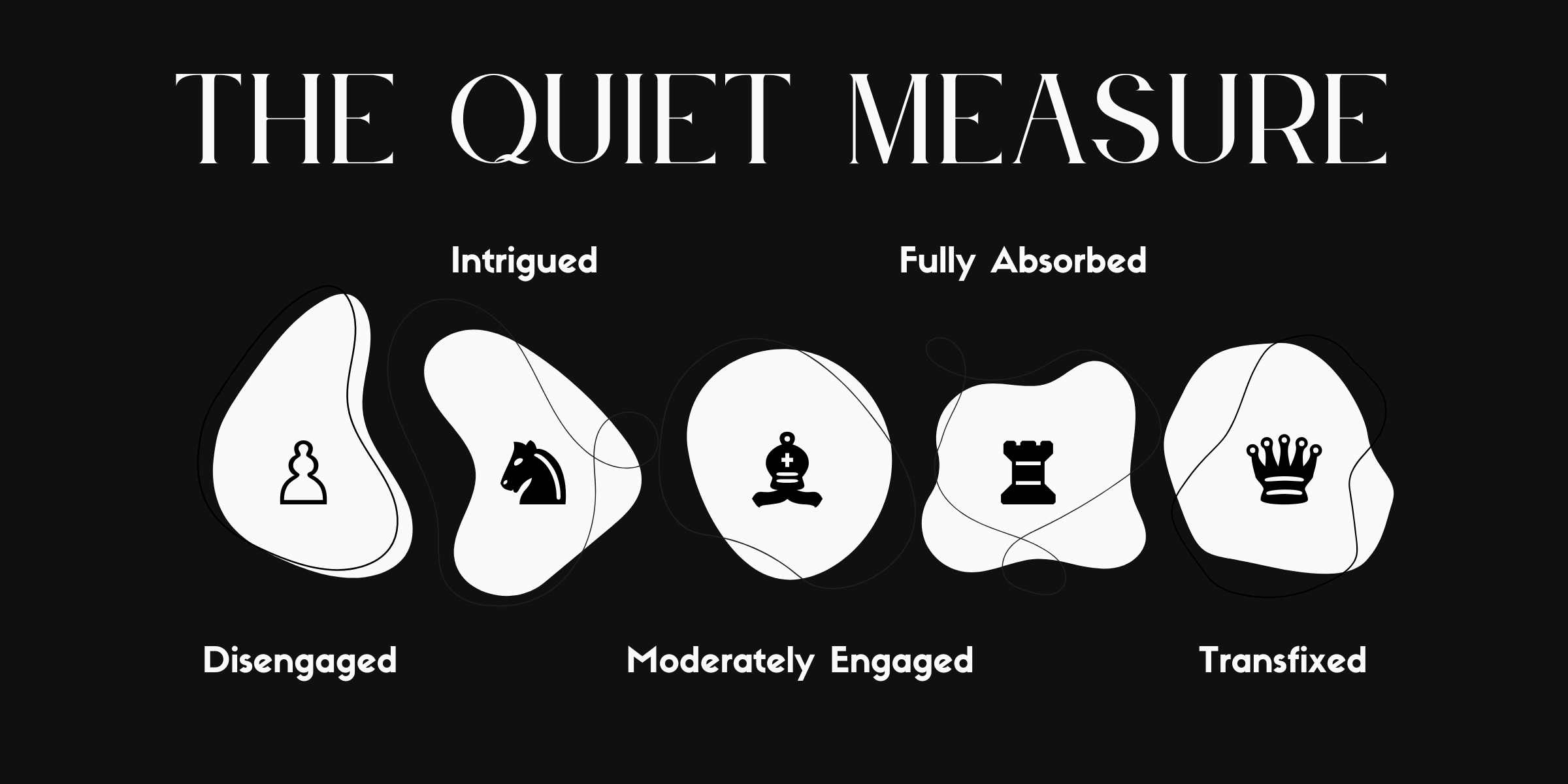
Path of Engagement
♞♝♞♜♝
Genres
Literary Fiction | LGBTQ+
Publication Date
September 8, 2026