

Review: 'The Disappointment' by Scott Broker
Through the fissures of being, fractured and uncontainable
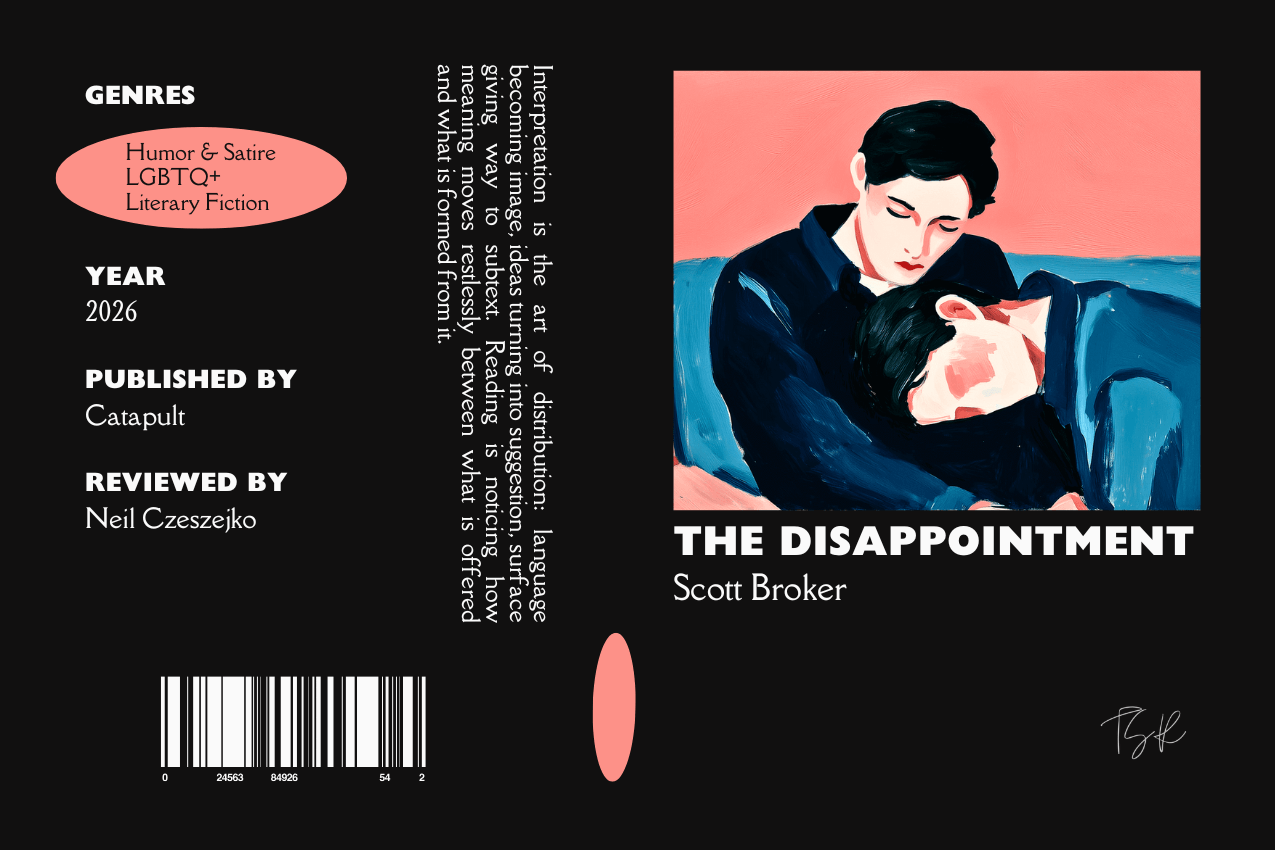
The Disappointment’s ultimate seduction seems uncanny, given the gash it leaves on its way to becoming a craving. But with sense and logic stretched thin in a show of perpetual erosion, the novel’s pull proves undeniable.
The story follows Jack and Randy, a married couple of ten years, embarking on their first vacation since the death of Randy’s mother. Her ashes, stored in a Ziploc bag, hint at what lies within: Randy’s self, divided between wakefulness, desire, and memory, and Jack’s, collapsing alongside his playwriting career.
The slightly surreal people they meet and the turns their lives take are neither wholly welcome nor wholly escapable.
And as events skew their perception of themselves—and each other—the core of their shared reality spills outward, threatening to stain the past as Jack clings to the eroticized abstraction of the present.
In a sense, Broker’s novel functions as a play within a play. With Beckett explicitly referenced early on, the characters weave in and out of chapters—or, perhaps more accurately, we stumble through the private galleries of their life—with the quiet desperation of one compelled to stay composed as something inside fissures.
The measured flow, caught between the ecstasy of release and the plunge back into languor, draws Broker’s dialogue into a heady dance, one that drums out a soundscape raised to a poetic climax with the agility of an abiding lover.
Beyond its mild edge, the narrative’s step helps ground abstract emotion, weaving lines that wind a breathless mechanism of response deep inside.
“(...) we are regular beggars for each other, in ordinary times.”
This marriage of form and vibration recasts every chapter as an almost theatrical gesture, with each title heralding a key phrase and each ending drawing its curtain in an echo of Shakespeare’s “all the world’s a stage.”
And yet, nothing about the narrative feels performative. Its surrealism is measured, flecked with specks of reality that, though irregular, remain embedded in human interiority.
There’s the indifference spurred by emotional undoing. There’s also the vortex of lovemaking, which sends bodies into collisions meant to erode the barrier of bone.
Broker brutalizes tenderness, carving emotion from all that surrounds it. He achieves this by echoing the Japanese ma—or negative space—which allows feeling to surface without being called into being.
This ambiguity complicates the novel’s central relationship, leaving Jack and Randy to thumb and tear through their shared membrane as they lose hold of the form that once felt impenetrable.
In Broker’s hands, surrealism magnifies this looseness, showing how inner worlds crash into reality’s structures. In doing so, he forces them to take on shapes that can no longer accommodate their physicality, pressed against desire, temptation, and the latent longings of bisexuality.
These are threaded through the men’s bodily interactions, creating a pressure that’s both destabilizing and acutely intimate. It’s this strain that turns the fevered dawn of their relationship into a delicate torment.
And with love—filthy, cannibalizing, and tender—beating steadily through the stretch of tissue, The Disappointment proves absence to be a thing of true density. Especially when it moves into the margins of the mind’s ribcage, tracing the “painful beauty” of a void intent on spending itself.
As in real life, the men’s yearning is only one aspect of the narrative; there’s the creaking step of life, the churn of idealist pursuit, precarious family dynamics, and the evisceration of the self through creative discharge, which deepens Broker’s meditation on art’s surreal hungers.
Even the vision of betrayal, however illusory, only tightens the tenderness it terrorizes, contrasting love’s bliss with the erotics of entropy.
The more doomed our descent, the more we resist rushing, heightening the friction between the story’s central modes of being: flesh or ghost, husband or lover, artist or admirer.
It’s in this tension that the body registers its extremes, with the warmth of a lover’s musk brushing against the coolness of a textured tongue. And it’s this coexistence of opposites that makes Jack and Randy feel so lifelike. In fact, through the immediacy of language, they’re all but grafted onto us.
“My skin hugs closer to my bones, then shivers like a sheet of aluminum when he speaks.”
By the end, Broker’s light surrealism successfully weaves interiority with externality. Love, art, and the human appetite for intensity—multiple, restless, and unresolved—ripple together, forming a single bruising wave.
In a similar vein, the novel’s erotic, emotional, and psychological threads no longer appear separate, shadowing reality’s dissolution as one.
Ultimately, The Disappointment is an act of heartbreak made need, desire collapsed into being, and longing outlawed by its own expectancy—as full-bodied as a wine-stung kiss. Its thrill lies both in the choreography of language and the way one impulse rushes into the next, leaving us shattered between surrender and subsistence.
An advance copy was provided by Catapult.
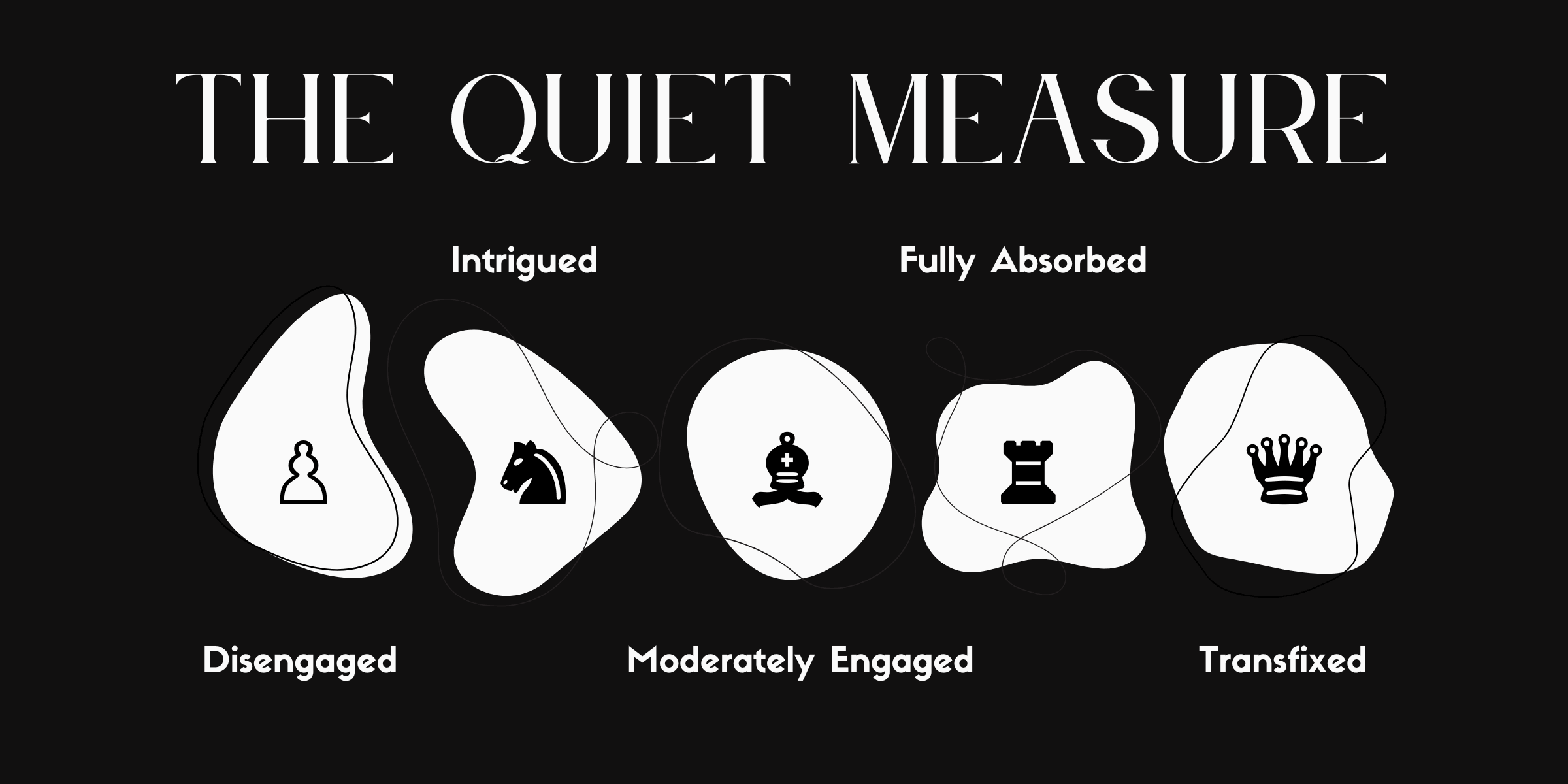
Path of Engagement
♝♝♜♛♛
Genres
Humor & Satire | LGBTQ+ | Literary Fiction
Publication Date
March 3, 2026