

Review: 'Hello, Limerence' by Momo Yamaguchi
The Morning After · Issue 04
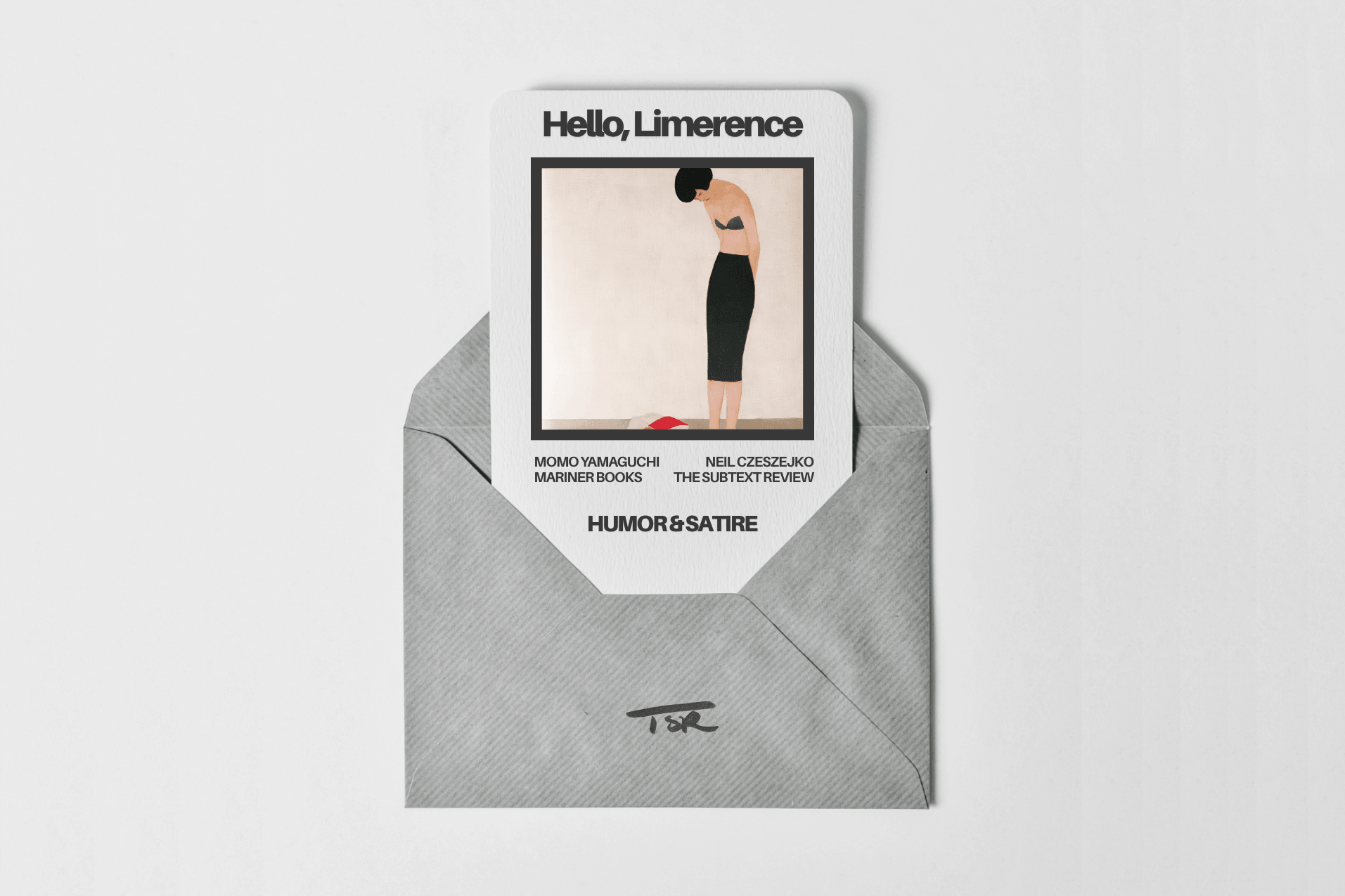
Notes taken the morning after a first date with Hello, Limerence by Momo Yamaguchi.
PROFILE
Mika is in her mid-twenties, sexually frustrated, professionally miserable, and increasingly unsure whether desire is something to satisfy or survive. Between unwanted advances and an increasingly dim view of the sex that surrounds her, she becomes fixated on being craved even as her own appetites grow impossible to contain.
Eventually, a sorry succession of sexual encounters, quarantine, and an unexpected reunion begin nudging her toward a life beyond her carefully rehearsed frustrations. Whether she’s actually changing or simply finding a new object for her limerence is another matter.
FIRST READ
visceral / unstable / fleshly
immediately affronted by the body, how it’s made up of gaze and touch, however clinical that first examination may be
at the chiropractor’s office, amid a flurry of cracks, the body takes shape again as something returned to itself
a seeming consequence of touch, and a rather telling portent of things to come
Mika’s in-the-moment fantasies—rather more horrific than sexual—arrive through columns of italics, with sharp indentations setting off the intrusions
these carry a corniness that feels vaguely descended from the bodice rippers of the ‘80s
then, just as suddenly, we’re dragged into the skinning shock of sexual harassment at work, with a film-like match cut hauling us from an office cubicle to the women’s restroom, where Mika’s world seeps past its frame
her fantasies undeniably take on a vicious, gory aspect, with the only thing separating them from something more hallucinatory being the fact that desire, though not always sexual, continues to propel them
as Mika’s unassuming facade conceals great volatility, we get a sense of how both our more lascivious and belligerent sides tend to remain circumspect
the line between the real and the unreal grows unclear, with an act of safety-pin defense against a molester on the morning commute seeming all the more jarring for its lack of italics
and so, within the first few moments, the novel offers itself up as a self-effacing plunge into embodiment, quite intriguing in its willingness to make the body both spectacle and site of discomfort
TABLE TALK
linguistic / profane / overripe
moves through a sequence of linguistic pirouettes that impress despite the depression they instill
initial promise lies in this very unwillingness to separate the ridiculous from the disturbing
desire, disgust, and violence sit tightly together, with each impossible to separate from the others’ prickly presence
and yet, since every line strives for both comedic grace and the graceless profanum, the eye doesn’t so much roll down the page as wheel itself across every passage
a hindrance that, admittedly, manages to even itself out in due course
keeps harmonizing the nauseated with the nausea-churning
we watch Mika pop blisters while reading back over a lengthy text message exchange with her crush, divulging the sauciness with great relish
plopping desire on its belly in this way—indeed, bearing its acne-scarred back—is somewhat like blister-popping itself: an indulgence that’s impossible to deny in the moment
and yet, the same devotion to titillation occasionally becomes excessive
Yamaguchi’s coddling of every image is felt most acutely when the object is of little significance, as with a much-fussed-over slice of toast spreading itself out across the foot of the page
the formal choices—the message drafts, occasional fantasies, and even a subpoena for nudes—are stylistically interesting, though the contents themselves feel too predictable to elicit more than a fleeting impression
PACE
spiraling / suspended / exhausting
the italicized fantasies mostly recede after the opening pages
and yet, when one does reappear in a technicolor burst of rage, it leaves us questioning whether it needed to be strong-armed onto the page in the first place
seems infinitely superfluous given how artificial the articulation of feeling can be
since the fantasies have no effect on the plot—indeed, are increasingly emotionally expendable—they trip up an already struggling eye
Mika’s meandering thoughts start to feel less like an opening into her interiority and more like a hastily acted-on desire to shock
when her world begins to recede in the wake of a romantic shake-up, run-on sentences (“and…and…and…”) naturally emerge as a way of conveying the numbness of heartbreak-induced ennui
moving through time becomes a procession of all things equally menial, regardless of how alarming they might seem
with Mika’s pleasure in sex being far less physical than symbolic, the narrative quickly begins to feel like a foiled orgasm stretched to the point of numbness
that lack of payoff is very much felt as strain in the body, which in itself is an accomplishment on Yamaguchi’s part
the pacing mostly finds its rhythm in the second half, once the narrative’s spiraling starts to feel more like an extension of Mika’s own suspended state than formal experimentation
TOUCH
imagined / wanting / uncomfortable
the body is both Mika’s obsession and her greatest source of alienation
but while she’s acutely aware of herself as a physical object, that awareness rarely translates into anything felt
instead, her attraction to Tai reveals how thoroughly her desire is mediated by her own sense of desirability: his primary appeal lies in the fact that—upon the trio’s first meeting—he chooses her over Nana, the big-breasted beauty embodying Mika’s sense of self-consciousness and female inadequacy
this offers a not-so-subtle reminder that desire and its satisfaction begin and end with the self
maybe in light of this, it’s all the more interesting how predatory Mika’s own imagined touch becomes toward those she deems “beauteous,” particularly the gorgeous yet unavailable co-worker she nicknames “Puddles”
the concept of virginity is—predictably and understandably—a claustrophobic room in Mika’s mind, restricting her self-worth while hinting at a reality in which adulthood is nigh-on-impossible without having first experienced, or performed, penetration
within Hello, Limerence, one can’t fully claim one’s body unless it has first been handled—or, more accurately, used—by someone else, and seemingly in a strictly heteronormative context
and yet, beneath the more obvious and childlike notions about sex and maturity, a more compelling understanding begins to take shape, with the appeal of the act lying not in stimulation or orgasm but in the heady sense of power that precedes it
perhaps an uncomfortable thought, but a refreshingly honest one
it’s therefore strange how at ease Mika appears when she’s first undressed and bared wholly before Tai, pubic hair and all
that monumental first stripping is typically a moment of newfound pressure, opening the body up to unfamiliar dimensions of perception
and yet, for someone so acutely aware of the felt limits of her own desirability, Mika hovers above the moment as though its novelty were a thing of countless lazy choreographies
less remarkable than inconsistent in terms of her characterization
also, for a novel given over to sex so completely, there’s little mention of the physical consequences of partaking in one another’s bodies, adding to the impression of a work obsessed with embodiment but choosing to remain stubbornly disembodied
in the sex scenes themselves, what’s arguably missing are scents, funks, textures, prickles, rushes, as well as the dissonance between emotional comedown and the residual proof of bodily consummation
this unglamorized focus could have matched Mika’s general irreverence, mining the absurdity of life rather than staging rehearsed shows of its frequent facades
the experience ultimately remains sterile and uninhabited, with nothing to convey experience aside from the heavy lifting of words like “erection” and “vagina”
this keeps the story surprisingly superficial, with far more mental space devoted to Mika’s fixation on the elusive “Hot Girl” or “Chill Girl” status, as well as the desire for desire itself
her private sex life also increasingly bleeds into her experiences of sexual harassment at work
the clinical, dissociative nature of these encounters mirrors her own relationship with sex, causing the two to overlap in discomforting but increasingly numbing ways
an impression that’s further complicated when Mika attempts to force herself on Tai, resorting to accusations of sexism when he proves unwilling to acquiesce to her arousal
this scene is interesting because it creates immediate friction
her agency is felt truly for the first time here, but instead of being a moment of personal victory, it’s warped by the introduced power imbalance: Tai has been invited over for a friendly drink and has nowhere else to go if he doesn’t wish to spend the night on the street
curiously, once Mika succumbs to her bisexuality in the final few pages, she seems to at least partially recognize gender’s performative nature, describing herself as playing “at being a man”
here, we feel how freeing the shifting contours of the non-heterosexual world can be
and yet, the binary remains firmly within Mika’s vernacular, continuing to give her world meaning
it follows that the newly located parts of herself are processed with remarkable haste so that they can be categorized and performed as expected
for example, her new septum ring marks her sexuality’s perceived divergence from the norm, while her apprehension at the speed with which her new relationship is moving is reduced to mannish behavior
still, this reliance on reductive stereotypes, while far from edifying or enjoyable, remains true to Mika’s particular way of sensing the world
like many, she’s happy to prune parts of herself to fit within the parameters of a sanctioned identity
THE SLIP
fractured / circular / unresolved
unsurprisingly, Mika proves a slick surface to keep trying to get to grips with: self-regarding, scathing, and frequently slippery in her awareness
specifically, her inability to learn from past disappointments quickly proves trying, though it’s possibly intended to reflect our own contradictions back at us
there’s also a tendency to conflate basic instinct—such as taking in another’s shape—with incivility, which inevitably paints repression as respect
in a similar vein, Mika frequently identifies the patriarchy as the historic foundation to blame for certain machinations of her life—including the expectation to shave her legs to adhere to a feminine standard—but rarely, if ever, allows her understanding of the system to extend into an attempt to free herself from the gendered contract she’s revising
instead, that cognition functions as a destination in itself, allowing her agency to remain dormant despite her own attraction to the desires she perpetuates: big breasts, a man’s thirst, and the simple kind of beauty that would in turn simplify the world’s reaction to her
her coquettish games of attention and withdrawal are themselves forms of transaction, with desire measured through scarcity, withholding, and possession
in keeping with this, she consciously performs submissiveness in the presence of men while expecting its opposite, thereby enforcing the gendered contract through her conduct
while this is where the satire would generally live, Mika feels too much like the author’s mouthpiece for that impression to hold
specifically, there’s a felt lack of exaggeration and contrast: Mika operates almost entirely from within the echo chamber of her beliefs and disfavors
the longer we sit with Hello, Limerence, the more difficult it becomes to shake the impression that satire may not have been Yamaguchi’s intention at all
the desire to carry her gloriously profane humor across every page is undeniable, so perhaps the design was never meant to be more expansive than that, with the work’s greatest appeal lying in being able to echo some readers’ thoughts back at them
though it’s equally possible that the painful constriction of Mika’s world would go entirely over several heads
this brings to mind Mr. Darcy’s observation in Pride and Prejudice (1813) that “there is a meanness in all the arts which ladies sometimes condescend to employ for captivation,” as well as Charlotte Lucas’ more pragmatic insistence that a woman should “fix”—i.e., secure—a man while she has the opportunity
the difference, of course, is that Mika inhabits a world in which the old matrimonial economy has been stripped of much of its ceremony without necessarily losing its transactional logic
indeed, given the novel’s explicit criticism of capitalism, there’s an intriguing possibility here: that its characters have become so thoroughly desensitized to commodification that they no longer expect anything to remain affixed, even as the urge to possess persists
sadly, the novel doesn’t quite seem to pursue this possibility, leaving Mika to recognize the mechanism around her without ever examining how deeply she has internalized it
much like her defaulting to the term “patriarchy” while reproducing its logic, Mika’s understanding of feminism remains unstable throughout
the word is repeatedly thrown about like a coat in springtime’s unsettled weather, with its main function seeming to be the swaddling of a smarting ego and the deprecation of men, whom she perceives as being free from societal expectations
her infidelity to any sort of ideal is felt most deeply when she offers critiques of fellow women whenever she senses her self-worth under siege from her own insecurities
then again, perhaps a glimmer of humorous self-awareness comes through in the statement: “It’s not me, it’s men.”
this generalization points to a knee-jerk exaggeration, reviving hope in the novel’s exceedingly subtle subversion
of course, this view could also have been penned with genuine earnestness; perhaps we’ll never know
sadly, the much-needed vulnerability and “emotional undress” of certain scenes is undercut by the observed reliance on elastic concepts and conceptually overloaded terms
a semi-erotic selfie sent to someone held mistakenly close to the heart should carry a hint of undoing: in effect, it’s a universal act of presenting oneself as sexually desirable, or simply hopeful for another’s desire
instead, the moment is clinically reduced to Mika performing “for the male gaze,” despite the recipient’s maleness playing no discernible role
this suggests a lack of attunement to the broad spectrum of sexuality—despite the rushed narrative subversion of this restriction toward the end—while also exposing the misleading marketing that occasionally categorizes the work as LGBTQ+
Mika’s generalized disdain, forever brutalizing, extends beyond biological sex to encompass ethnicities and cultural identities, reducing potential friends and suitors to the color of their skin, their choice of sexual partners, and the roles that come with their perceived gender identities
at one point, she jokes about being a burgeoning psychopath, which would signal a rare moment of recognition were the narrative not pointing to a more sociopathic inclination: people are only ever of any worth if they can be of use to her
CAUGHT THE EYE
the warmth of romantic infatuation compared to the “liquid blanket” produced when relieving oneself in the shower
salaciously abused socks discarded by the bedside, sitting erect “like meerkats”
WEATHERED MOOD
lurid / lonely / absurd
presents a refreshing take on the city from a Tokyo native: brutally utilitarian buildings and overworked people spitting phlegm and retching on the streets
the gaijin gaze found in viral videos, representing a foreigner’s outlook, becomes a faraway, impossible presence: an outside fascination with a city whose reality goes unseen and unmoved by the hostility of its omission
while Mika obsesses over bodies, the city produces them, exhausts them, humiliates them, then makes them carry on
in fact, Japan’s toxic work culture surfaces frequently, in a fittingly horrific fashion, creating a welcome counterweight to Mika’s otherwise wearying navel-gazing
there’s a persistent sense of loneliness, but also disillusionment, futility, and the sheer meaninglessness of operating within society’s rigid structures
this thematic machinery, while of great benefit to the work’s overall architecture, inevitably feels as self-evident as its undeveloped ideas about gender
the author’s tendency to default to truisms, without an apparent interest in shifting their building blocks, ultimately feels perfunctory if not entirely subservient to statement-over-subversion
interestingly, and rather wittily, the COVID-19 epidemic is referenced without being named outright, masked instead as the lockdown-inducing UBS (Uncontrollable Bowel Syndrome) contagion
this artificial removal from the reality of the not-so-distant coronavirus pandemic allows the work’s relative humor to blanket the mundane without provoking the thing beneath
AFTERTASTE
pasty / uneasy
like polishing off a second helping of dessert while mentally trying to metabolize the density of glucose in the bloodstream
An advance copy was provided by Mariner Books.
THE NIGHT’S TURN
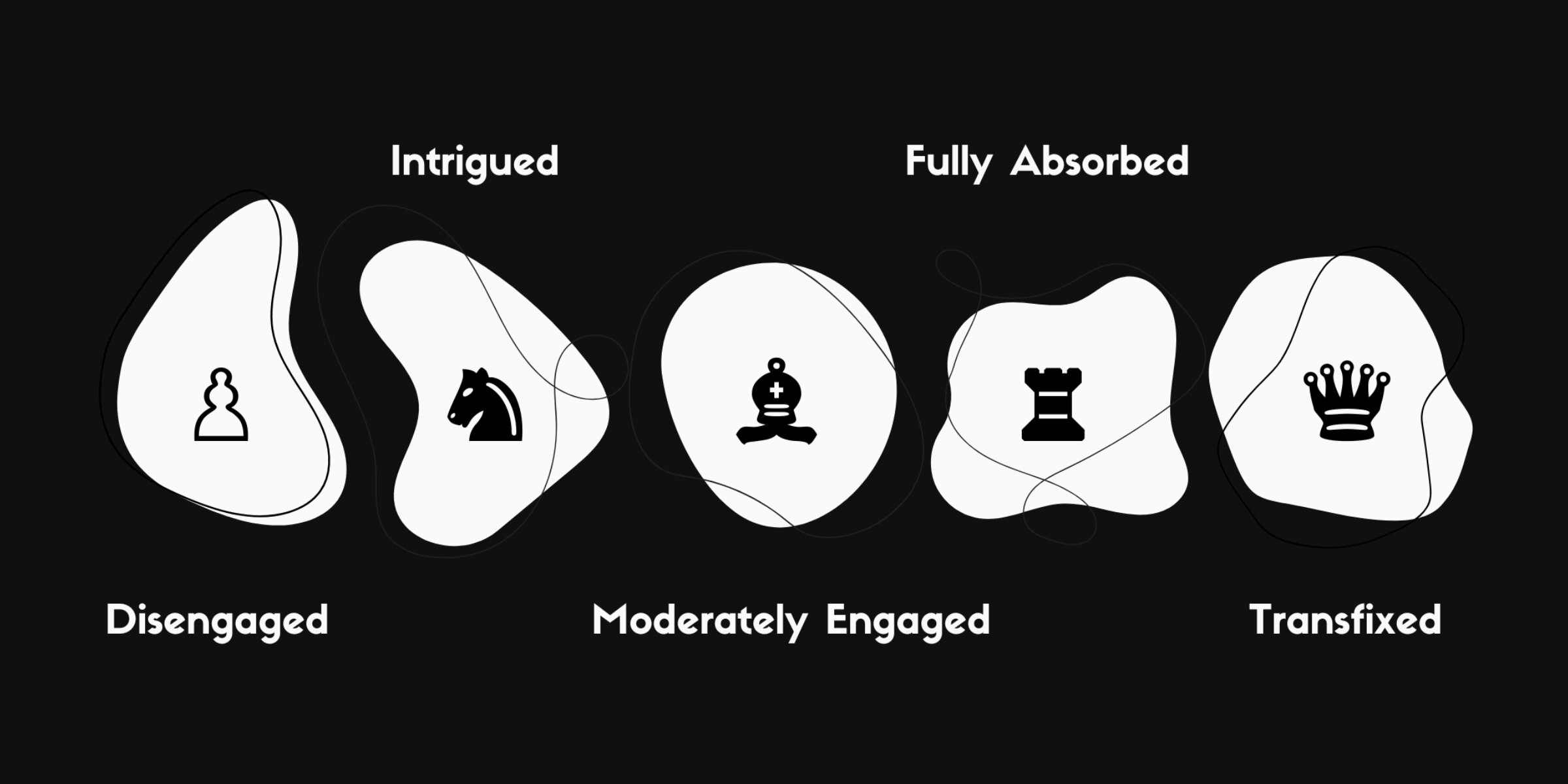
♞♝♙♙♞
GENRE
Humor & Satire
PUBLICATION DATE
August 18, 2026