

Review: 'Apparently, Sir Cameron Needs to Die' by Greer Stothers
Liminal lives and dangerous prophecies
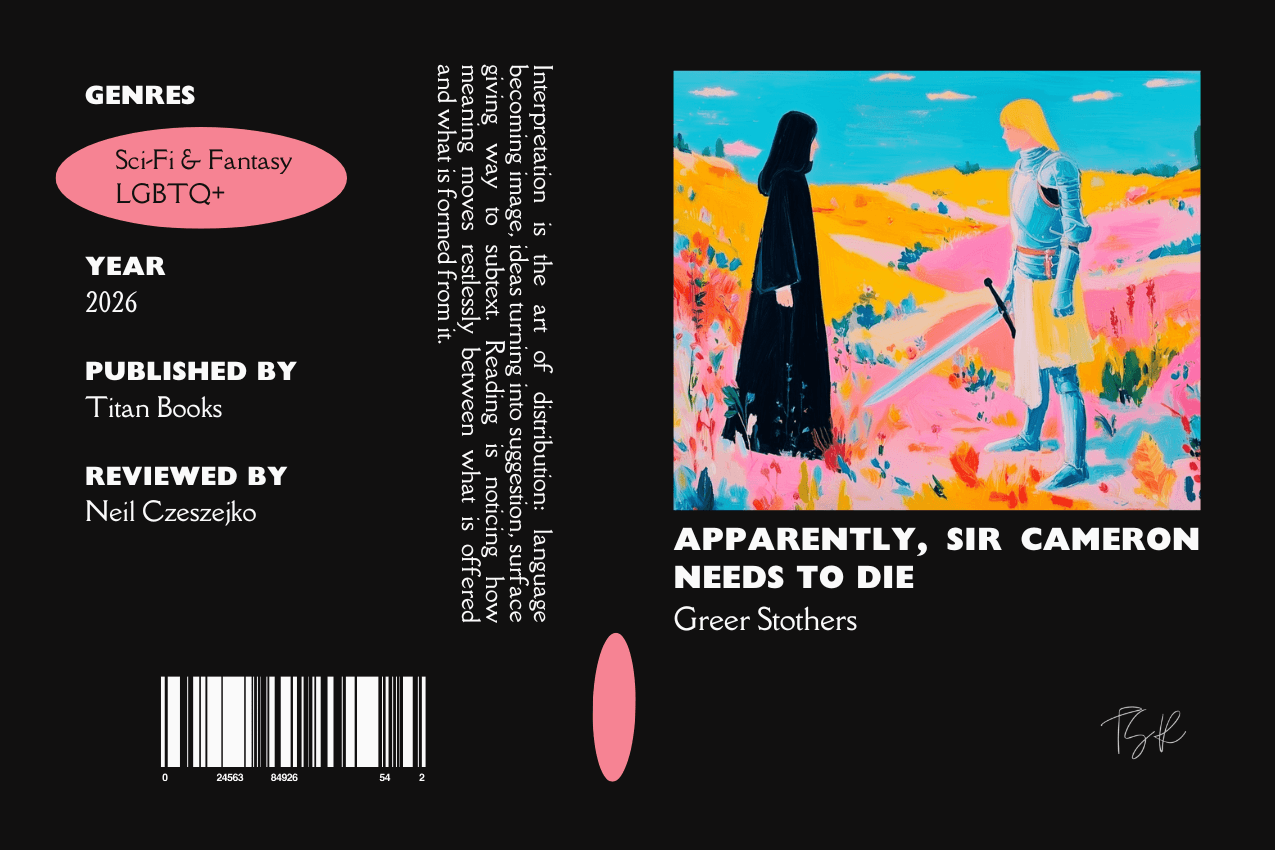
In Apparently, Sir Cameron Needs to Die, a handsome knight with an uncanny talent for skirting death is suddenly confronted with a prophecy that marks him for the end.
When even his closest companion turns against him, Cameron thrusts himself into the reluctant care of Merulo, a surly and oftentimes cruel sorcerer. What follows is a story in which survival, attraction, and absurdity collide as the world teeters toward collapse.
The novel’s comic timing is precise, and its rhythm—sustained through character growth and narrative cadence—is one of its most impressive qualities.
Occasional moments of gore provide a welcome counterweight to the levity, grounding the story’s fantastical energy, and the prose sweeps us away in swells.
But the story’s most striking aspect is undeniably its approach to physicality. Cameron spends much of the early narrative in a transformed female form, acclimating to open displays of tenderness and the delight of Merulo’s touch.
His mutation introduces fluidity into all facets of being, from his physical navigation of the world to sexuality. This creates a perspective on desire and identity that’s rarely foregrounded with such abandon, especially since there’s no discernible hitch in Cameron’s understanding of himself.
This liminality becomes even more thrilling thanks to the story’s playfully dressed notes of BDSM, which operate at a curious angle.
With Merulo’s lack of physical strength or conventional appeal, the erotic tension between his sadism and Cameron’s masochism feels abstract, though compelling—an interplay that mirrors the story’s broader contrast between surface and substance.
No wonder, then, that Apparently, Sir Cameron Needs to Die takes on the look and feel of a hard candy: sleek on the outside, but with a treacly core of emotional and bodily turmoil. In many ways, this tough exterior mirrors the rigidity of systems imposed on bodies, both in the novel and beyond.
That said, its reliance on humor limits a deeper exploration of embodiment, leaving Cameron’s experiences of desire largely unexamined.
It would have been interesting to consider how the same erotic encounter can evolve depending on who’s involved, and how sensations move across differently sexed or hormonally altered bodies.
Even behind closed doors, touch and release shift awareness alongside the body’s instinctive rhythms. Anatomical differences can make the same encounter feel remarkably singular, with one form of penetration often experienced as more visceral—and invasive—than the other.
This might have complicated Cameron’s reaction to being retaken, or—physically speaking—taken for the first time in either his male or female form.
It’s tempting to wonder if this kind of inquiry could have deepened both his relationship with Merulo and his appreciation for the duality of his erotic experience.
After all, the link between mind and body offers a compelling lens for exploring the limits of our understanding of the world’s physicality. This is especially true for trans identities, whose varied experiences offer rich insight into desire and selfhood.
That said, looking at this too closely might have made the narrative feel overly clinical. Here, the author’s nonbinary identity helps contextualize the story’s more cerebral perspective on corporeality.
Parallel to this is the looming threat of Cameron’s gruesome end, and the figure who quickly proves hungriest for it. But since the narrative leans so heavily into levity, there’s little true tension. Even the most hostile force comes across as too petulant to be genuinely menacing.
Intentionally or not, the novel positions repression as one of its central antagonists, focusing on how the denial of bodily truth fuels fear and contempt.
This pressure heightens friction between opposing forces: sex and sexlessness, gore and humor, magic and technology, human projection and the anxieties that drive it.
In the end, while not a heart-stopping adventure, Apparently, Sir Cameron Needs to Die remains a boundary-probing experience.
An advance copy was provided by Titan Books.
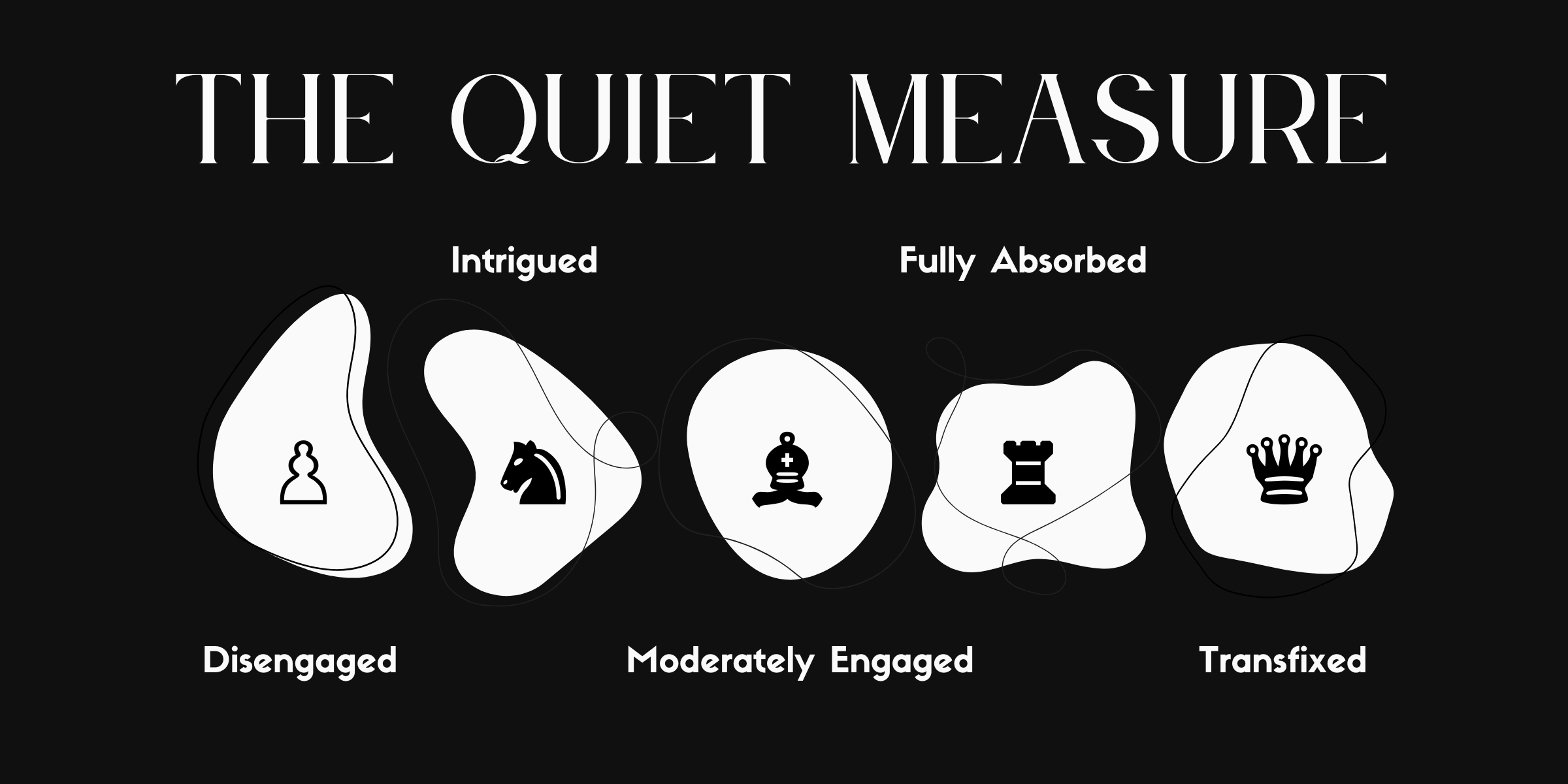
Path of Engagement
♞♜♜♝♞
Genres
Sci-Fi & Fantasy | LGBTQ+
Publication Date
February 3, 2026