

Review: 'All that Refuses to Die' by Michael Imossan
Tracing the geometry of a body shaped like thirst
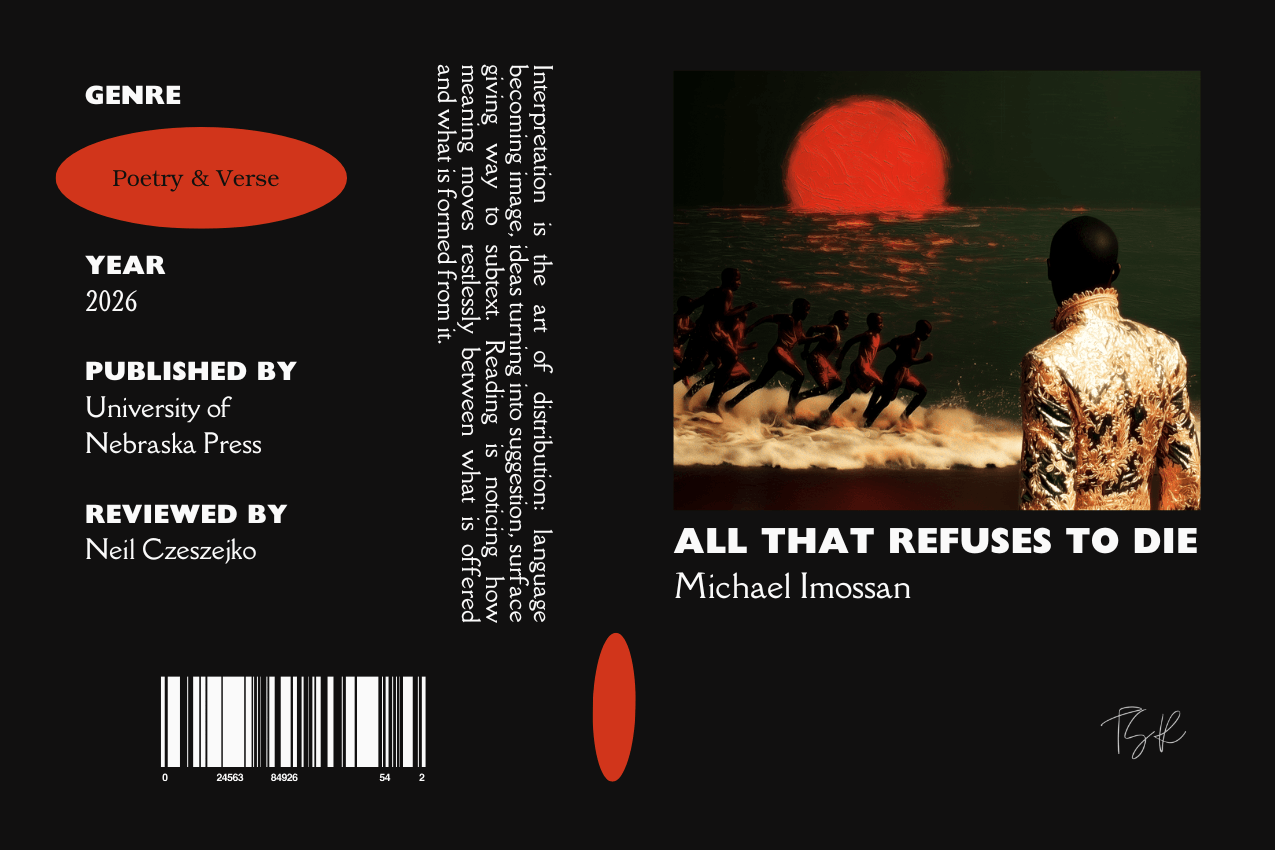
In All that Refuses to Die, Imossan navigates wounds stretched continent-wide, unnerving both that which resists and yields to the pull of water.
The poetry collection opens with a movement aware of its own pressure, rooting its imagery in recognizable patterns of prejudice. Emotion, twisted into discomfort, courses through the landscape, accelerating its flight from the thieving night and the “charred bones of burnt girls becoming one with the sand.”
Rather than rely on the singular beauty of precision, the verse quickly loosens its ribbed form, easing into narrative when faced with scenes too stark for wonder’s hold.
The effect is deliberately destabilizing, as if lyricism itself were being tested against the weight of what it’s asked to carry.
Much like a painting, All that Refuses to Die first draws the eye to the vastness of life’s disharmonies, gradually narrowing the gaze to a single figure bent into the canvas. Imossan achieves this by meshing history’s violation with the stillness that carries it forward, compressing sorrow into the lived anguish of present-day autocracy.
His words, in turn, transform sensation into a dismantling of sense. And in refusing to deny terror its tautology, he confronts the difficulty—perhaps even the impossibility—of impressing one world’s atrocities onto another.
After all, self-seeking tends to flatten humanity to a point “where God is nothing but / a shift in language, a war for supremacy.”
Underlying this movement is a persistent artistic dilemma: How do you paint suffering without stirring the grayness that drives so many eyes away in search of color?
As this tension deepens, the poems begin to teeter between lyrical meditation and a more prosaic register, as though recording the limits of language along silence’s borders. It’s here that instinct overrules articulation, and being human proves insufficient.
As the poems linger over raised scars, language offers itself more freely to narration, attempting to draw the fantastical into more graspable forms:
“My mother says water is home where thirst, grey and tired, /
comes to rest its head after a day’s work. And all our dead lying /
peacefully at the sea’s bottom are shaped like thirst.”
At times, Imossan seems wary of poetic opacity, following keener images with reflection that feels diffuse by contrast.
And yet, this lends the collection’s middle an almost diaristic quality, as though bled onto the page from a place reserved for the most intimate of probings. The poet acknowledges this himself, invoking all that “is without interpretation.”
What follows is a renewal of lyrical force, collapsing introspection into a devastation of flesh: torn, scraped, sliced, blown apart, hollowed out by a nation’s consumption of its own citizens. From this autopsy comes a delicate hurt:
“(…) the moon perches on our skin and we become a cold evening.”
Faced with renewed precision, anguish slips free of abstraction, exposing its invisibility. This, in turn, reveals a world in which delight, despair, and death flatten into equivalence, especially when stylized for broadcast spectacle.
As Imossan points out, suffering—when filtered through this lens—risks becoming image rather than experience, with bodies choreographed across screens “like fishes trapped in ice (...).”
What offers the poet a measure of agency is the drag of the tongue along the blade of language, with one side dulled by the other’s thinning boundary.
“A knife passing through the body only teaches it healing.”
Here, the collection expands its gaze, positioning violence as residue rather than event. Starvation stirs under poetry’s skin. Laughter strains toward suffocation, with children’s ribs ready to pierce the vessels running through their ravines.
Over and through this suffering, thought extends like blossoms toward a heat-softened sky.
And in the background, water remains a witness, a shivering animal cresting over the men seeking safer lives in the night. Even the sun slinks behind the earth’s screen, its body surrendered to a darkness of lesser grief.
Against this restlessness, Imossan’s deliberate play with tense sustains the poems’ threat of violence, holding hope and fear at the same point of fading.
As this tension sharpens, sorrow narrows further, now funneled through the body of a lover. The longing for the one outstayed by their absence presses deep, twisting the poet’s figure away from the gaze of the painting’s examiner.
By the end, All that Refuses to Die appears near-dreamlike, keeping bodies briefly whole as love undoes all of history. And yet, what ultimately refuses to die is the pressure that has carried us here, pushing into language as it turns words over in search of substance.
An advance copy was provided by University of Nebraska Press.
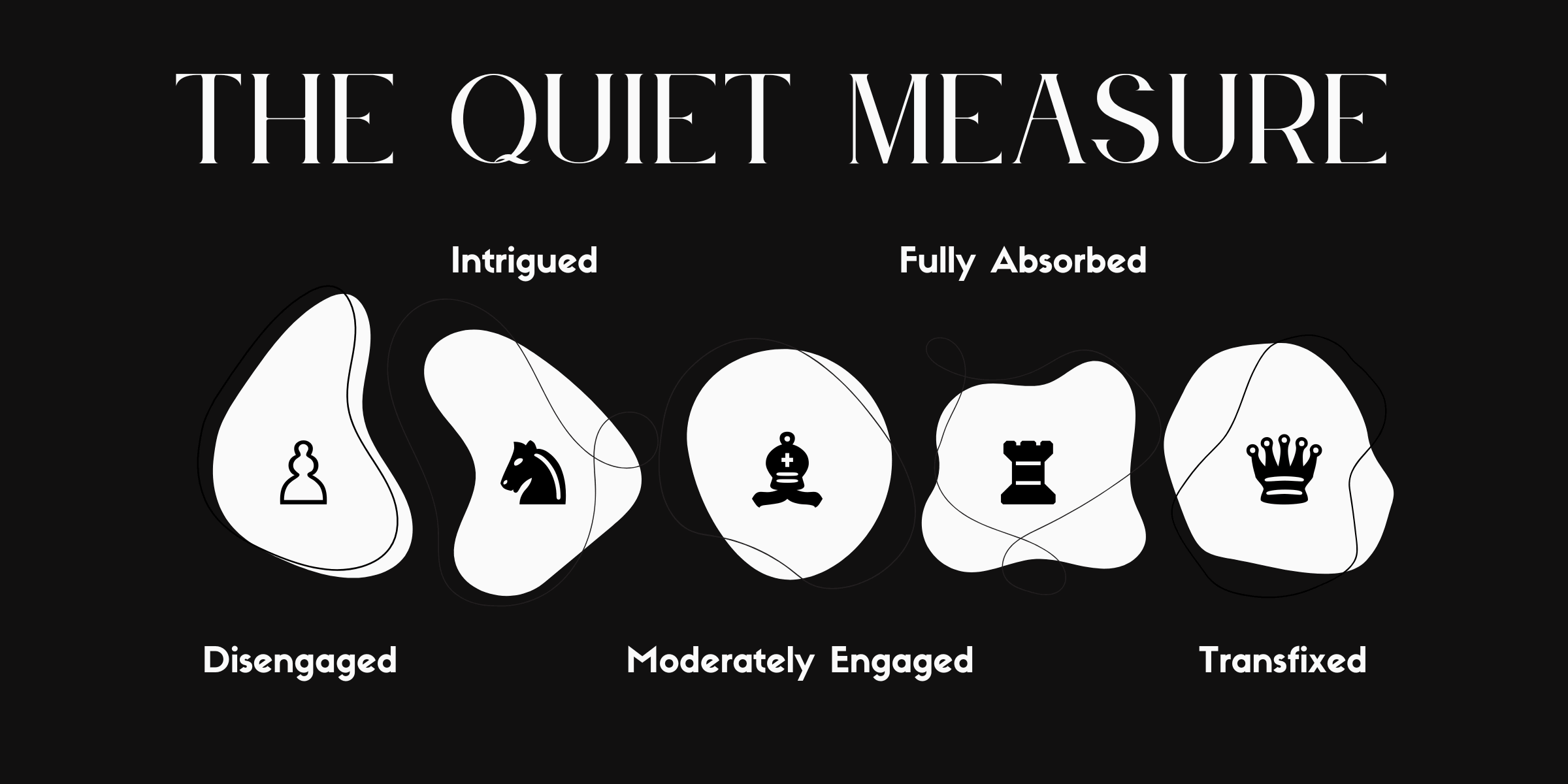
Path of Engagement
♜♝♞♜♛
Genre
Poetry & Verse
Publication Date
March 1, 2026