

Graphic Review: 'Flip Flip Slowly' by Mame Ohtako
In a quiet town, attention travels far
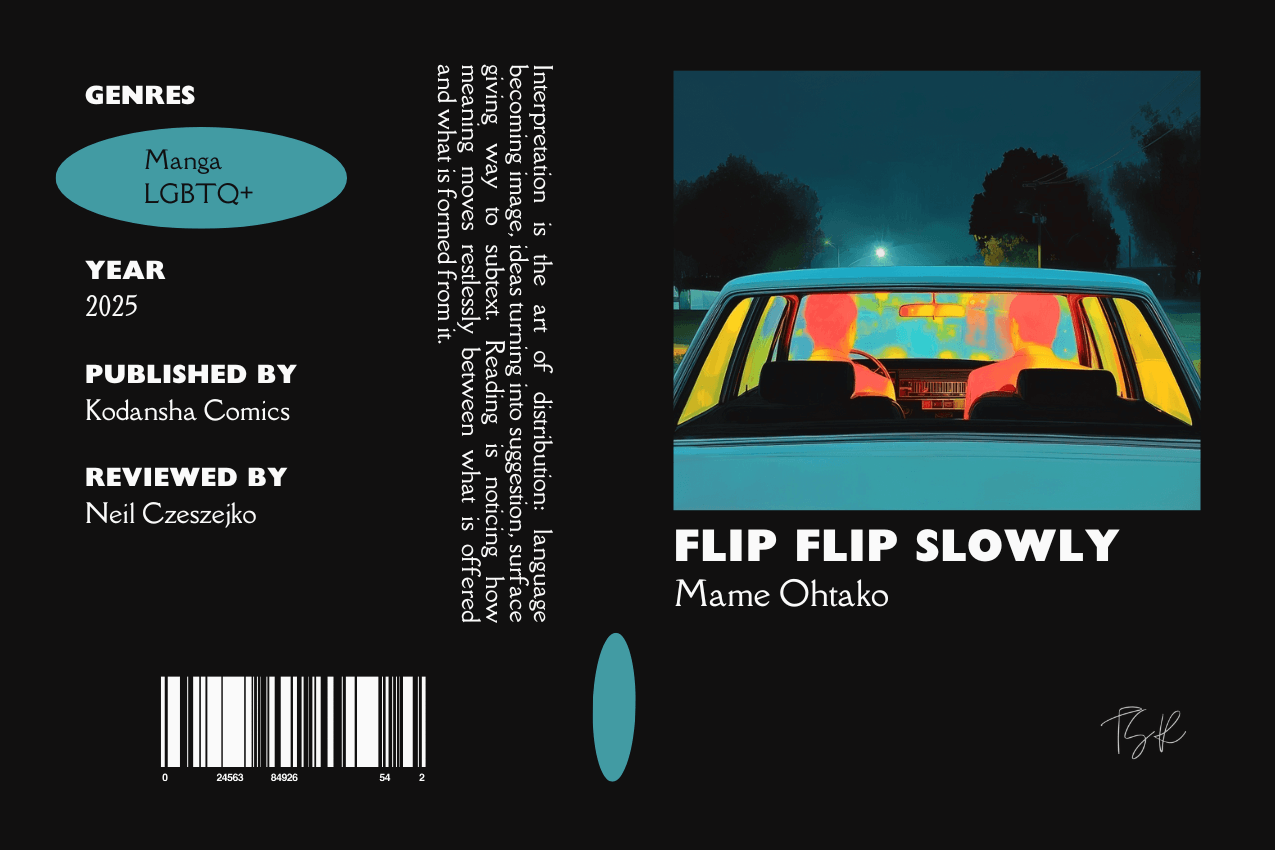
In Flip Flip Slowly’s quiet country town, a new regular appears at the library where young Hagiwara works. He can’t help but notice the smallest things: the man’s presence and punctuality, his careful way of reading, the stillness he carries.
Observation slips into curiosity, and curiosity into something harder to resist. But how do you close the distance in a place built for silence?
Space
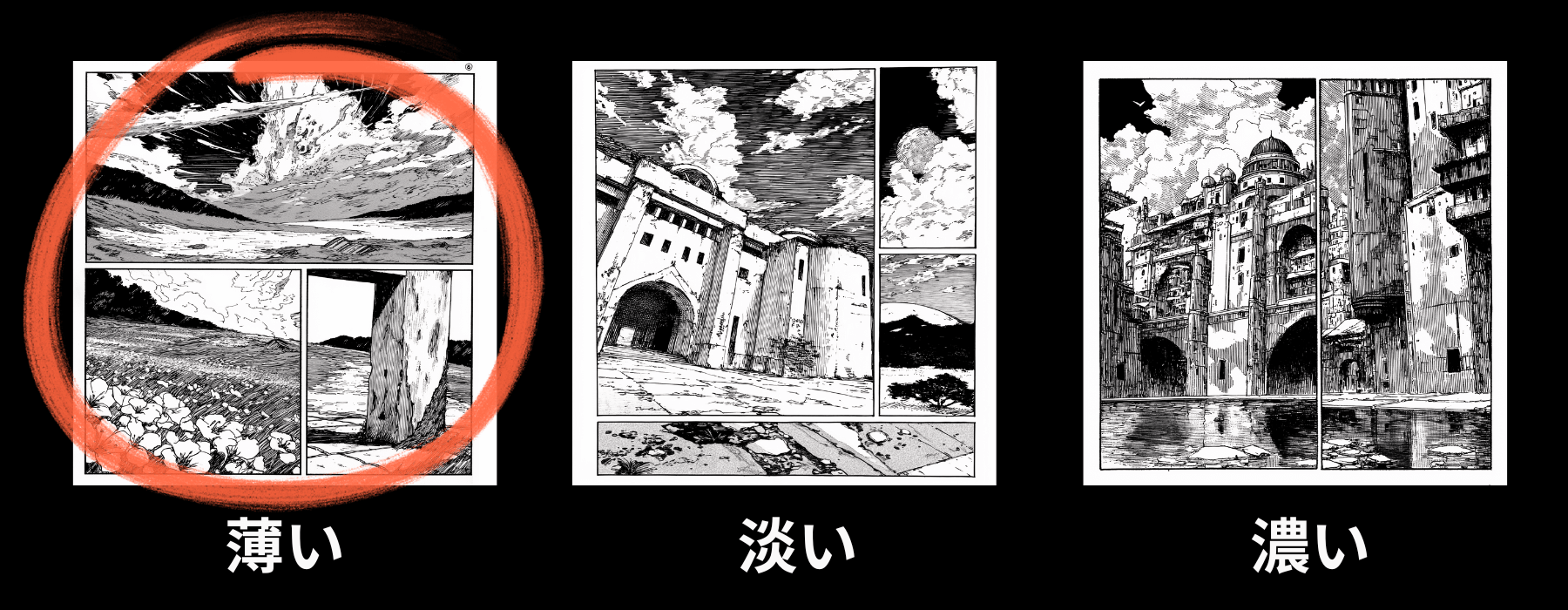
薄(うす)い
The manga situates itself decisively away from the city, opening instead into the countryside, shoreline, library, and open air—essentially, spaces that suggest physical and emotional latitude.
Their expansiveness dominates the visual field. Even when the men are confined to the interior of a car, the space feels transitional, creating a site of movement and quiet freedom.
Space is less about scale than orientation: a turning outward from density toward distance.
View
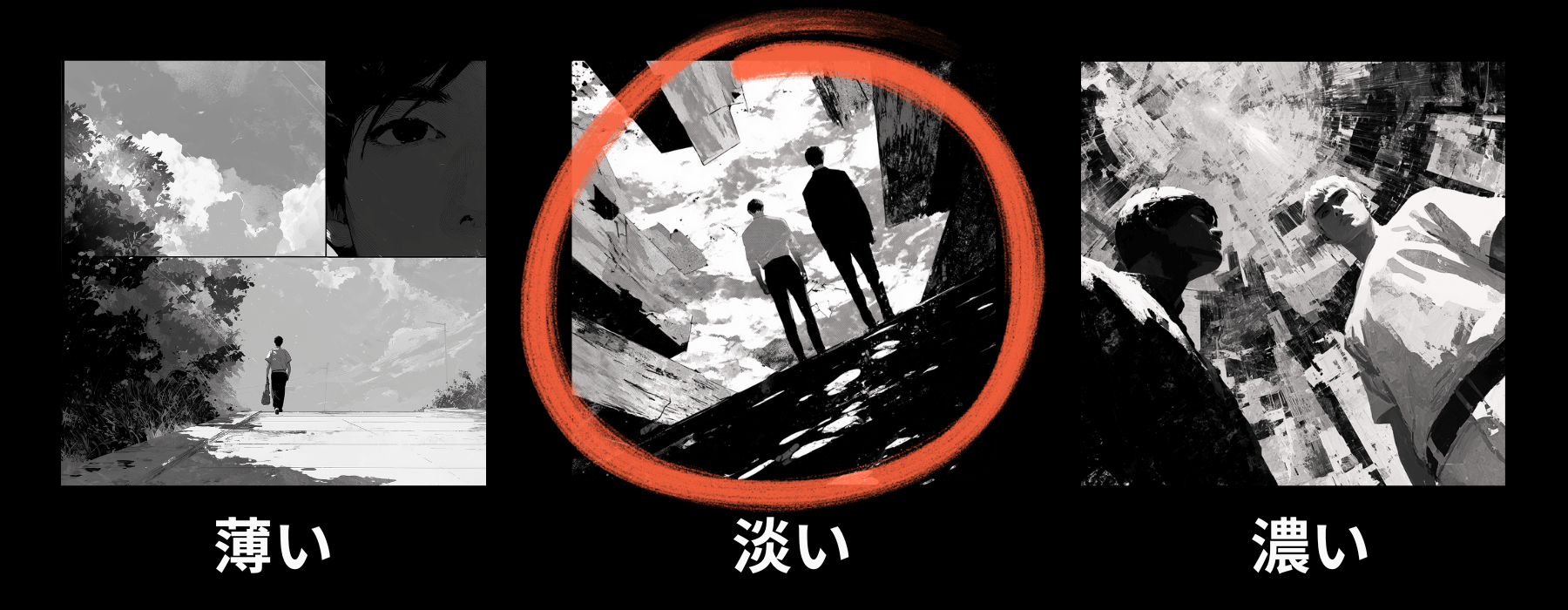
淡(あわ)い
Perspective introduces motion where the story itself resists it. Three-quarter, low-angle, and bird’s-eye views appear occasionally, lending bodies presence and momentum that counterbalance the manga’s slow tempo.
These shifts activate otherwise still scenes—the quiet library, a parked car—introducing motion without disturbing the manga’s deliberate restraint.
Line
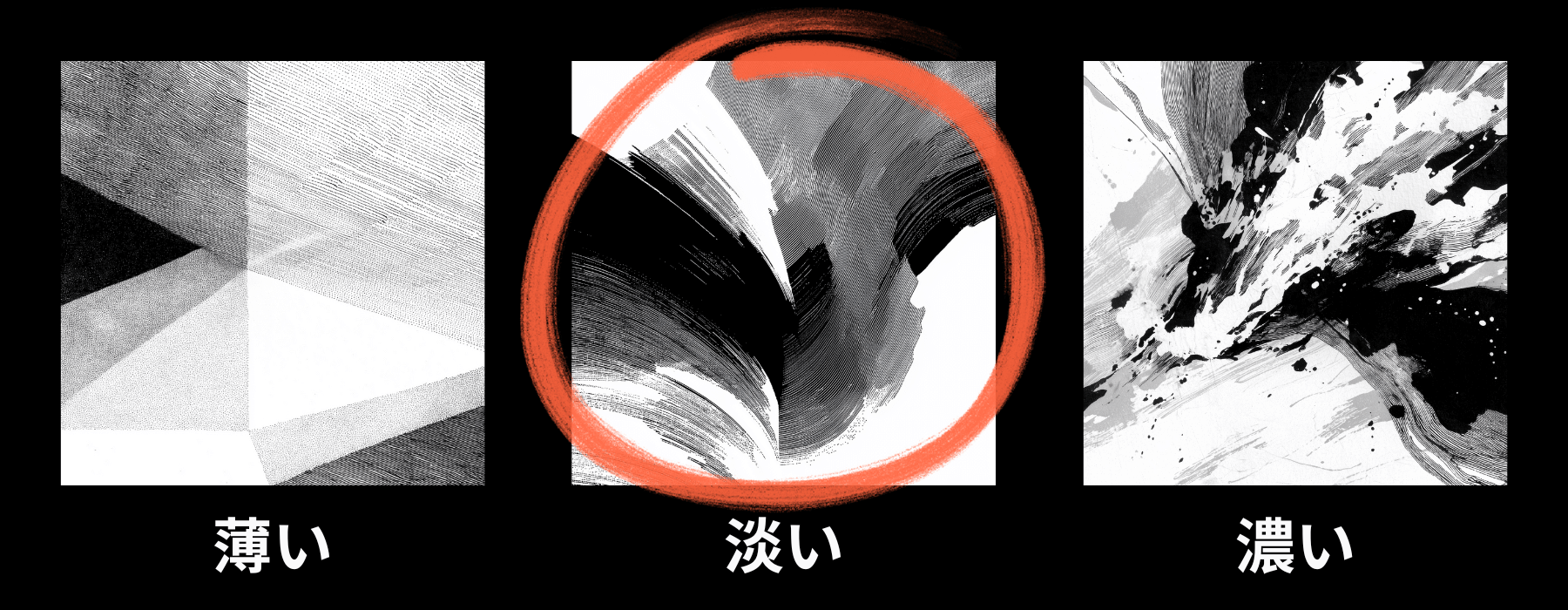
淡(あわ)い
The linework oscillates between precision and deliberate collapse. Fine bone structure, delicate shading, inward-gazing eyes, and tense posture are rendered with remarkable care, quickly establishing visual exactness.
This control becomes most legible when it’s punctured by humor: expressions drop away, figures flatten into shocked silhouettes, and white space surrenders to the flood of mortified black.
Remarkably, the ebb and release of the artist’s linework maintain tonal balance, allowing levity to coexist with emotional credibility.
Subtext
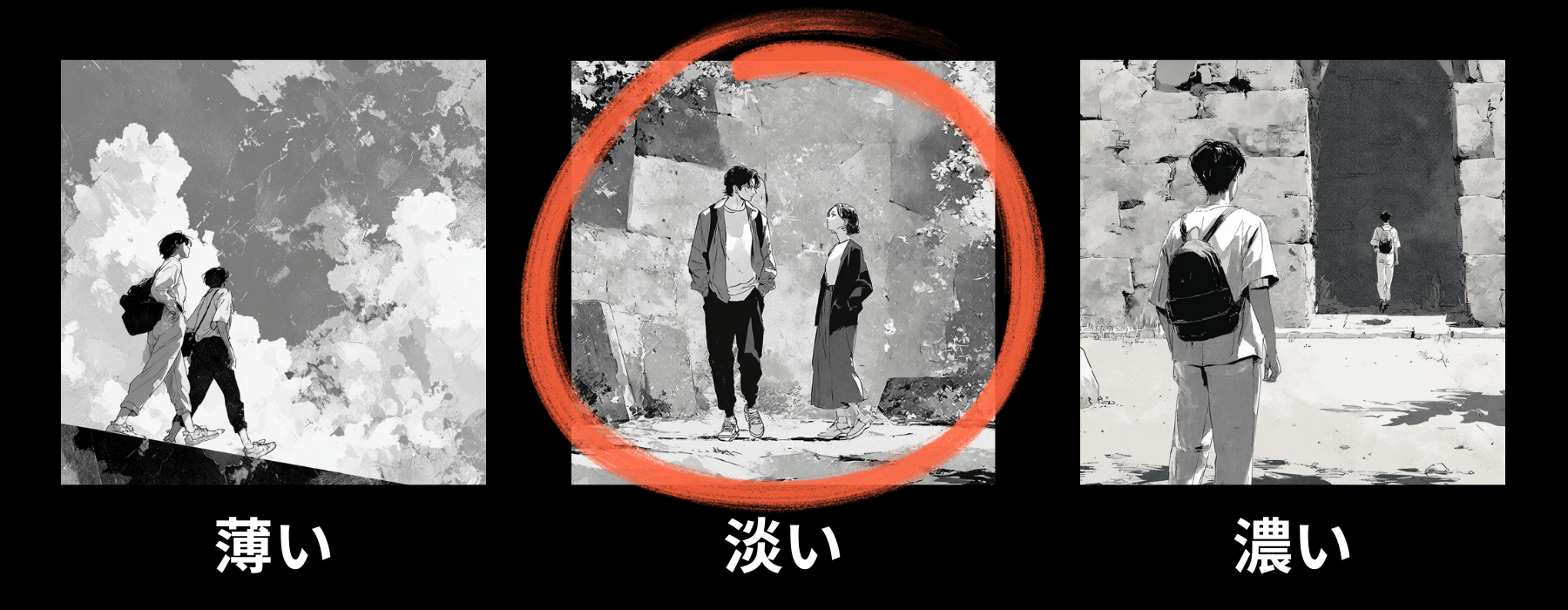
淡(あわ)い
The manga’s subtext operates through partial knowledge and formal restraint. Hagiwara doesn’t fully understand the older man he’s drawn to, but he senses a lingering melancholy that hints at unresolved adolescence and emotional fatigue.
This gap is reinforced visually. Translucent speech bubbles allow the setting to show through, subordinating dialogue to atmosphere, while run-on and overlapping bubbles capture nervousness and emotional spill.
Meaning accrues in these absences and overlaps long before anything is fully articulated or understood.
Narrative Immersion
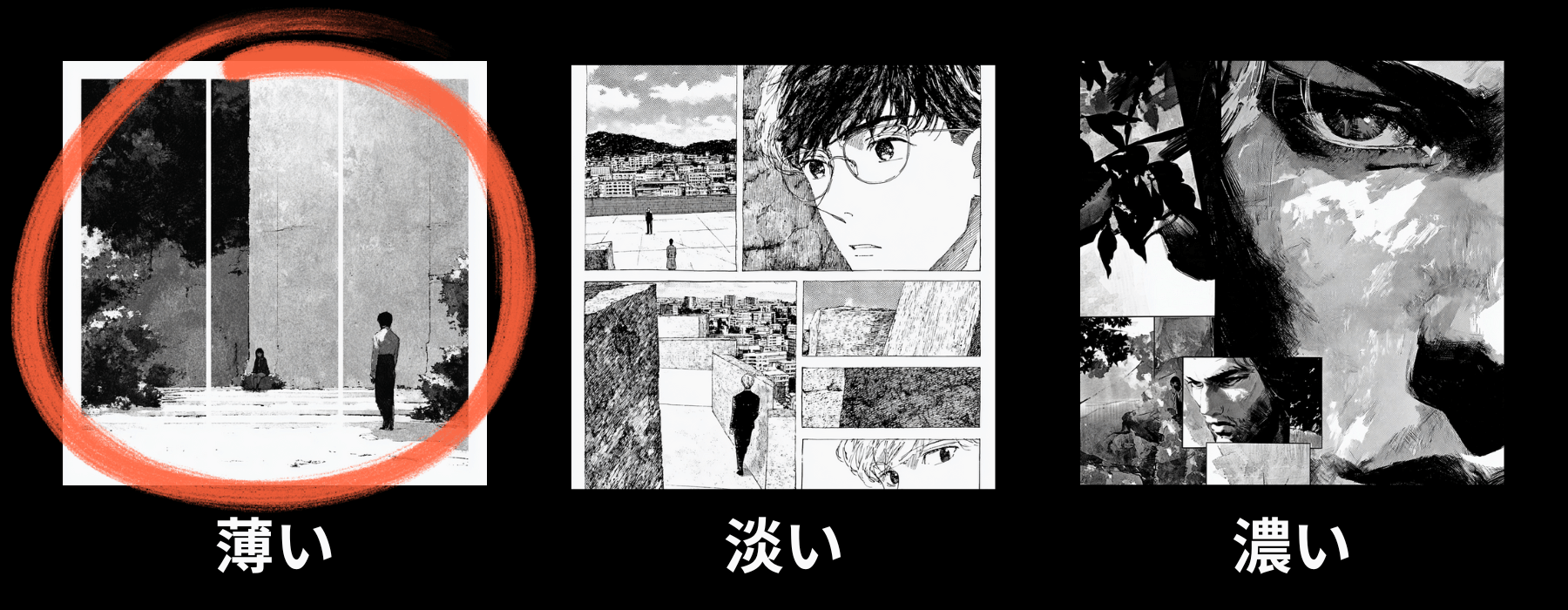
薄(うす)い
Narrative propulsion is minimal, guided more by curiosity and circumstance than by event. Scenes unfold at the speed of attention rather than action, with pauses and visual digressions creating a kind of narrative negative space.
As a result, our immersion in the story stems mostly from the artwork itself. It carries the distinct mood and rhythm of a quiet Japanese countryside, inviting us to linger and feel rather than anticipate.
Emotional Depth
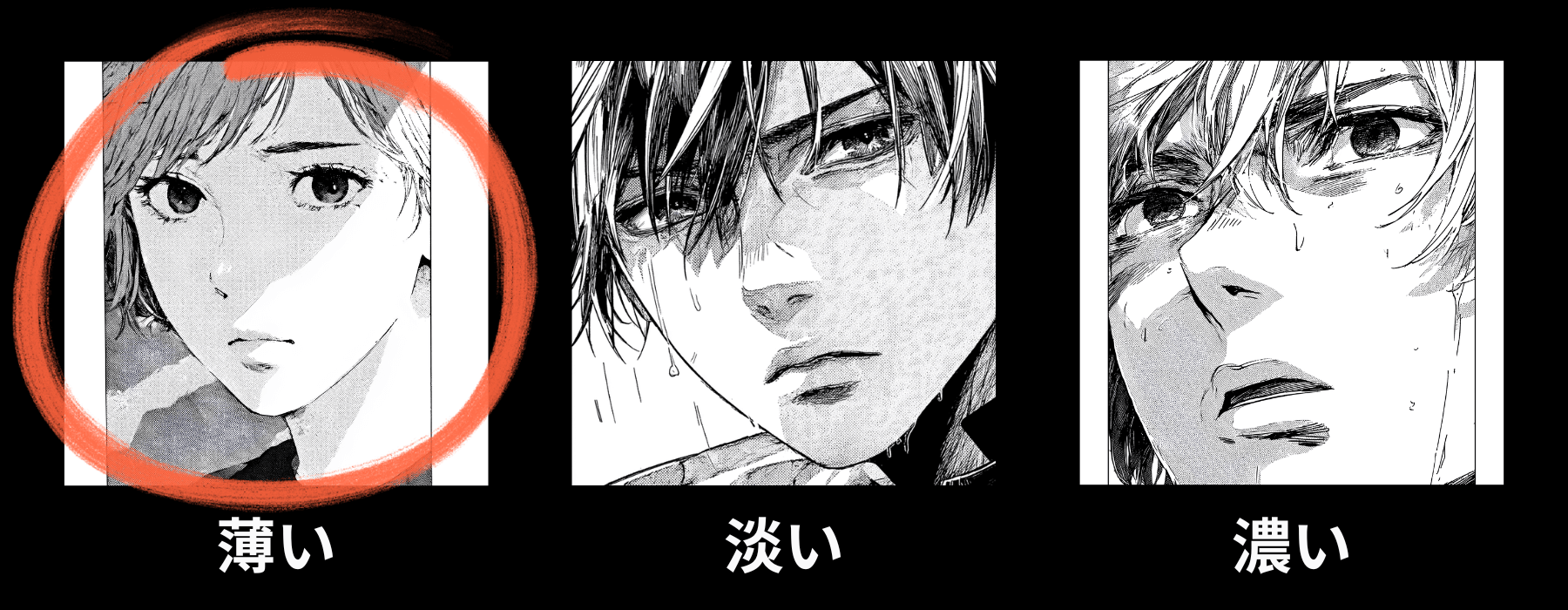
薄(うす)い
The emotional wounds the story touches on belong largely to the past. In the present, their intensity is softened into reflection, no longer sharp enough to wound.
We’re left with a slow release, a kind of tentative opening toward continuity, possibility, and the quiet labor of staying in the moment.
Color Saturation
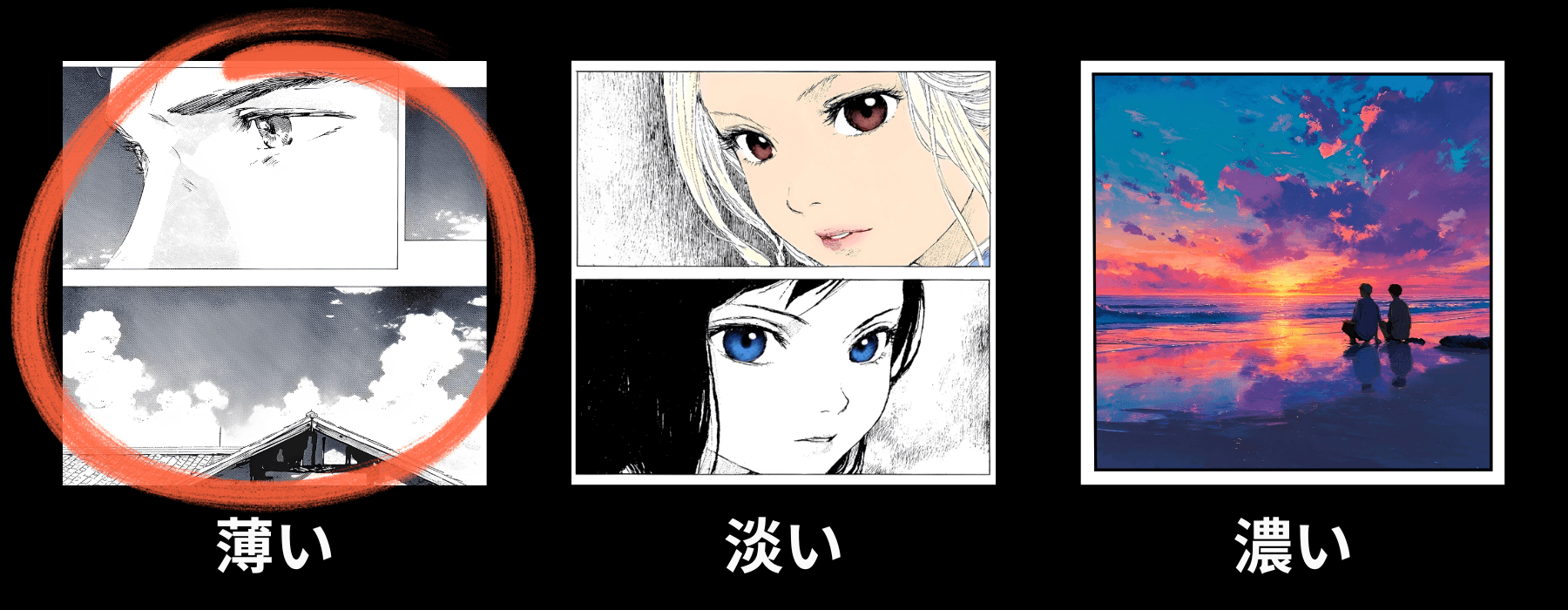
薄(うす)い
Rendered entirely in black and white, the manga relies on contrast, shading, and light rather than saturation to establish tone.
This restraint aligns with the story’s subdued emotional register. When large open spaces of the pearlescent sea appear, meshed with the spill of white down a shadowed cheek, they function almost like breathwork, reinforcing the work’s controlled rhythm.
Erotic Charge
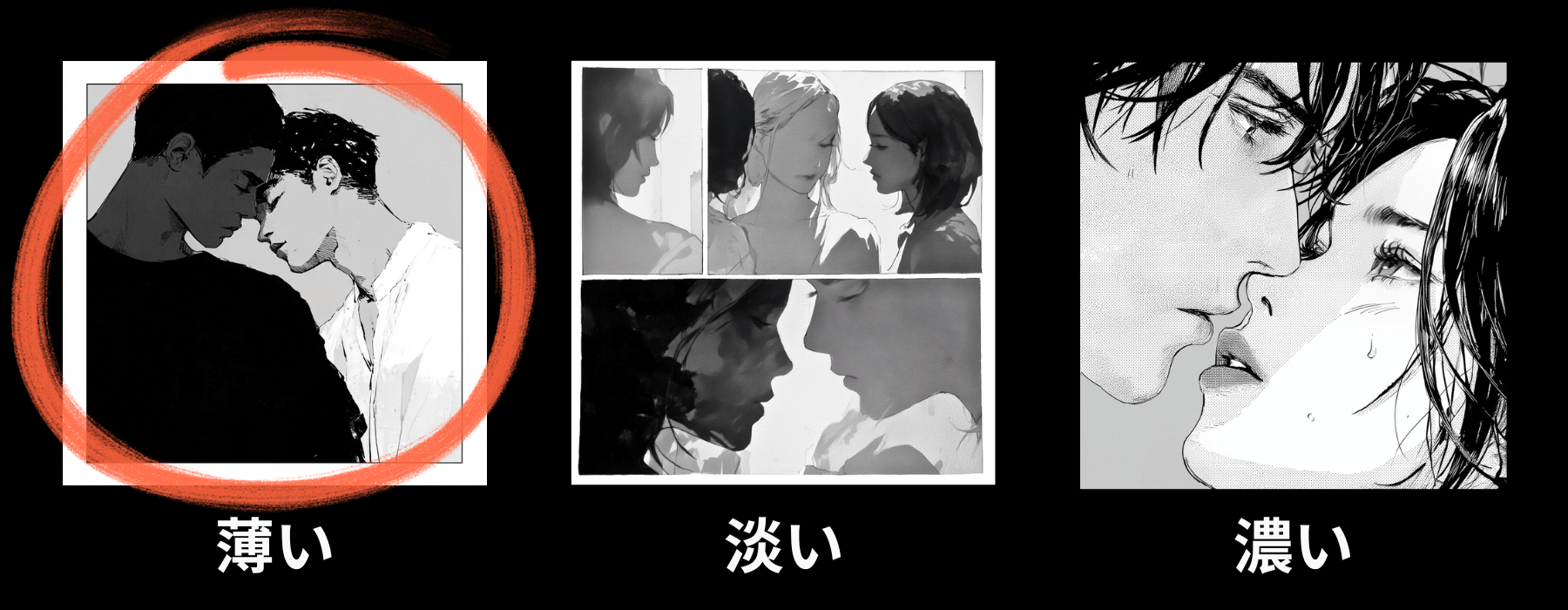
薄(うす)い
Erotic tension is understated to the point of near-absence. Without the explicit dialogue that acknowledges deeper feelings, the relationship would read as largely platonic.
What tension does surface feels mostly circumstantial, born of proximity and limited possibility rather than genuine infatuation. This inevitably keeps desire muted and contingent.
That said, while intimacy barely extends beyond kissing, it carries a surprising intensity: wet, heady, and sensory in its own right, more about tasting closeness than escalating it.
An advance copy was provided by Kodansha Comics.
Path of Engagement
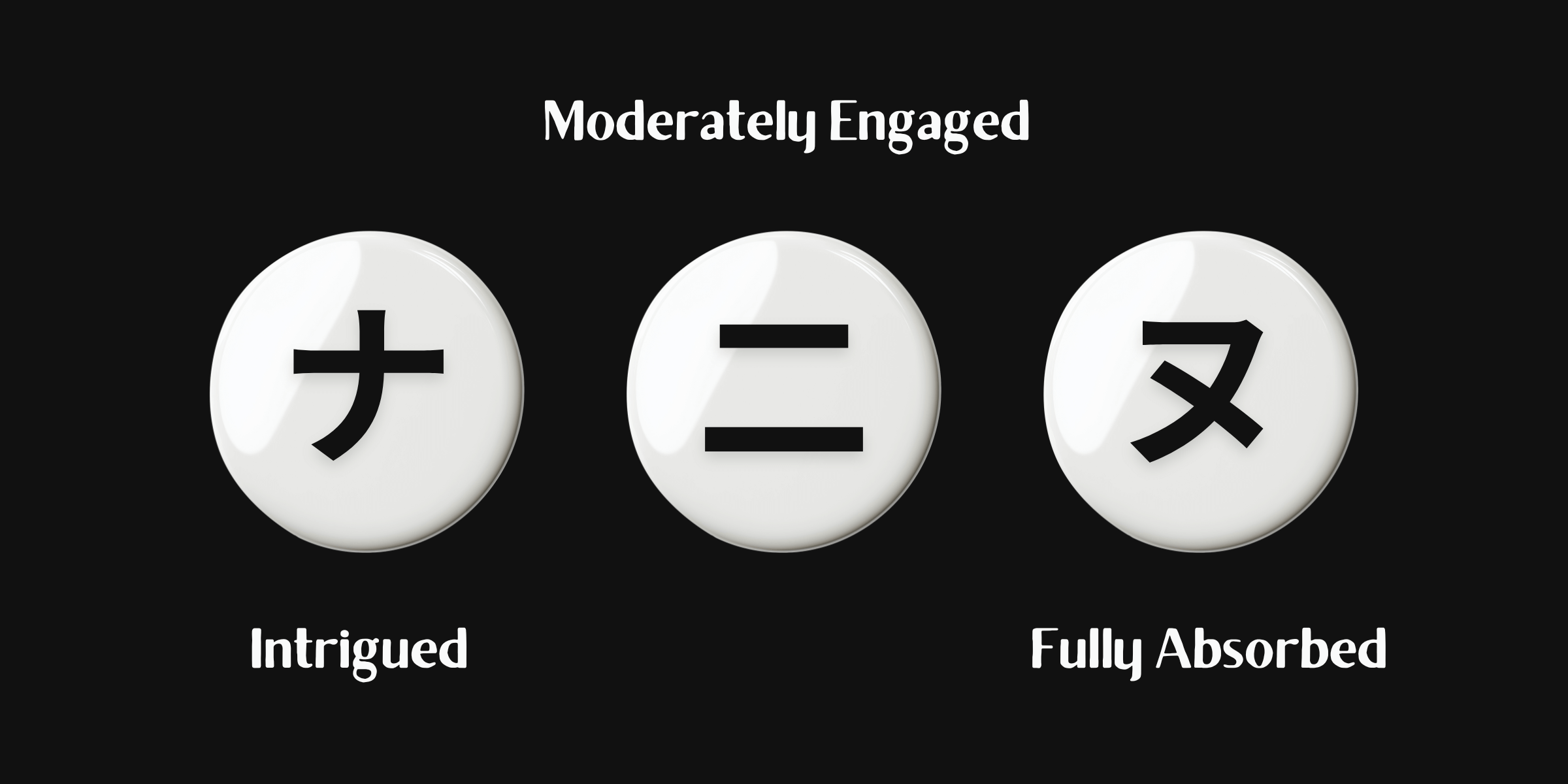
ナ二ヌ二
Genres
Comics, Graphic Novels, Manga | LGBTQ+
Publication Date
December 16, 2025