

Breakdown: 'My Roommate from Hell' by Cale Dietrich
A study in narrative strain
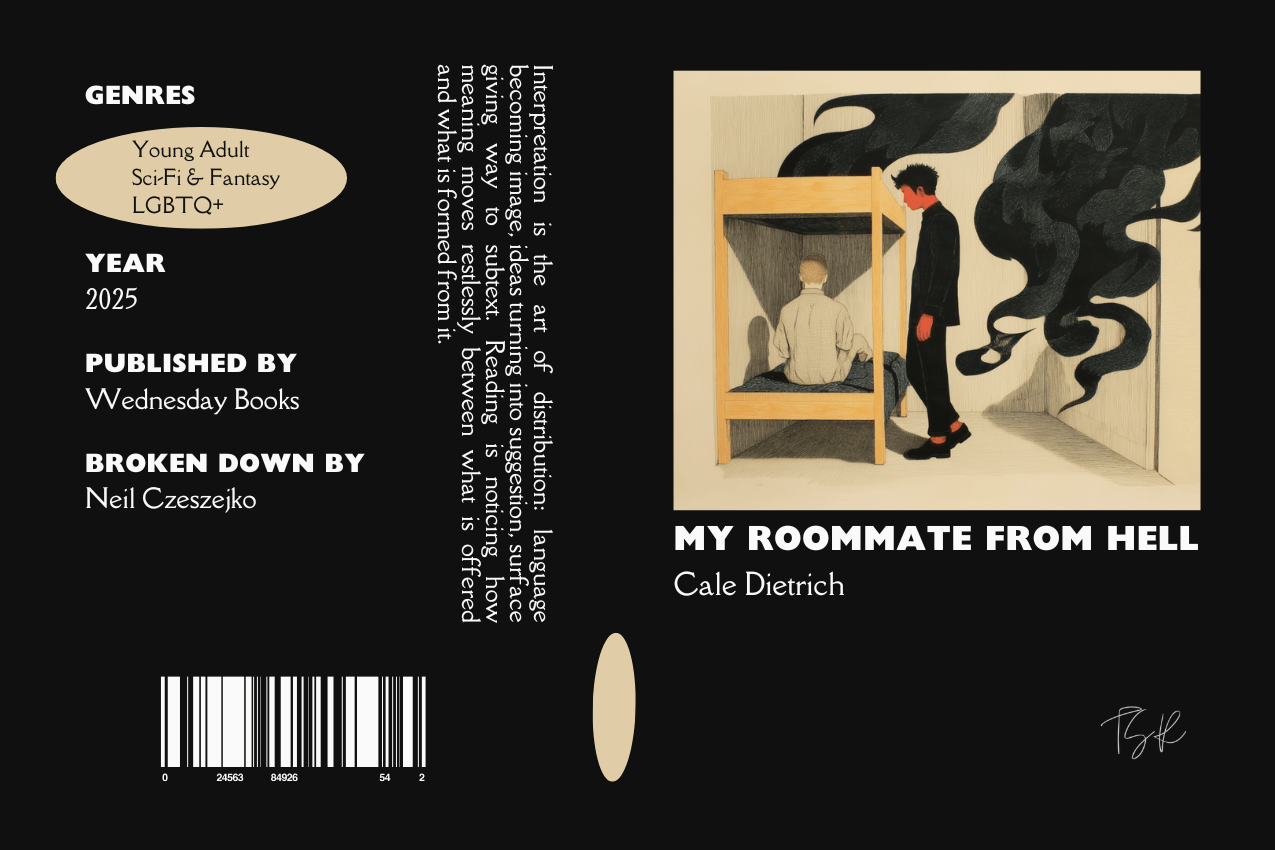
My Roommate from Hell (2025) follows Owen, an orderly and ambitious eighteen-year-old, as he embarks on his first semester of college.
While the campus lives up to his every secret hope, his enthusiasm is dampened by his best friend’s absence. That, and the fact that he’s going to be sharing a dorm room with the literal prince of Hell.
While Zarmenus’ regrettably good looks don’t factor into Owen’s growing despair, his quickly established status as the worst roommate on Earth does.
And with the whole world watching, including a militant group eager to rid humanity of demon kind, the need for tactfully silent suffering has never been more pressing.
It’s no surprise, then, that feigned romance emerges as a possible—and precarious—escape from a mounting crisis.
Here, Dietrich’s allegorical use of demons to present the marginalization of—and prejudiced hostility toward—certain social groups is clever. Likewise, his championing of queer lives through the fantastical and humorous is a welcome touch.
That said, the narrative ultimately falls short of its conceptual basis, making this breakdown an attempt at thumbing the cracks in the foundations—all in an effort to nurture a story harvested before its ripening.
All on the Page
What’s clear from the start is how devoid of subtext the prose is. While this is common in works aimed at younger readers, simplification rarely encourages genuine reflection.
Not trusting us to read between the lines—or interpret a gesture for ourselves—does little to anchor us to the characters or the world they inhabit.
In practice, this means that the mind starts to drift as the eye rolls down the page, letting passiveness slip into boredom, impatience, or both. An example of this comes up during the boys’ first meeting:
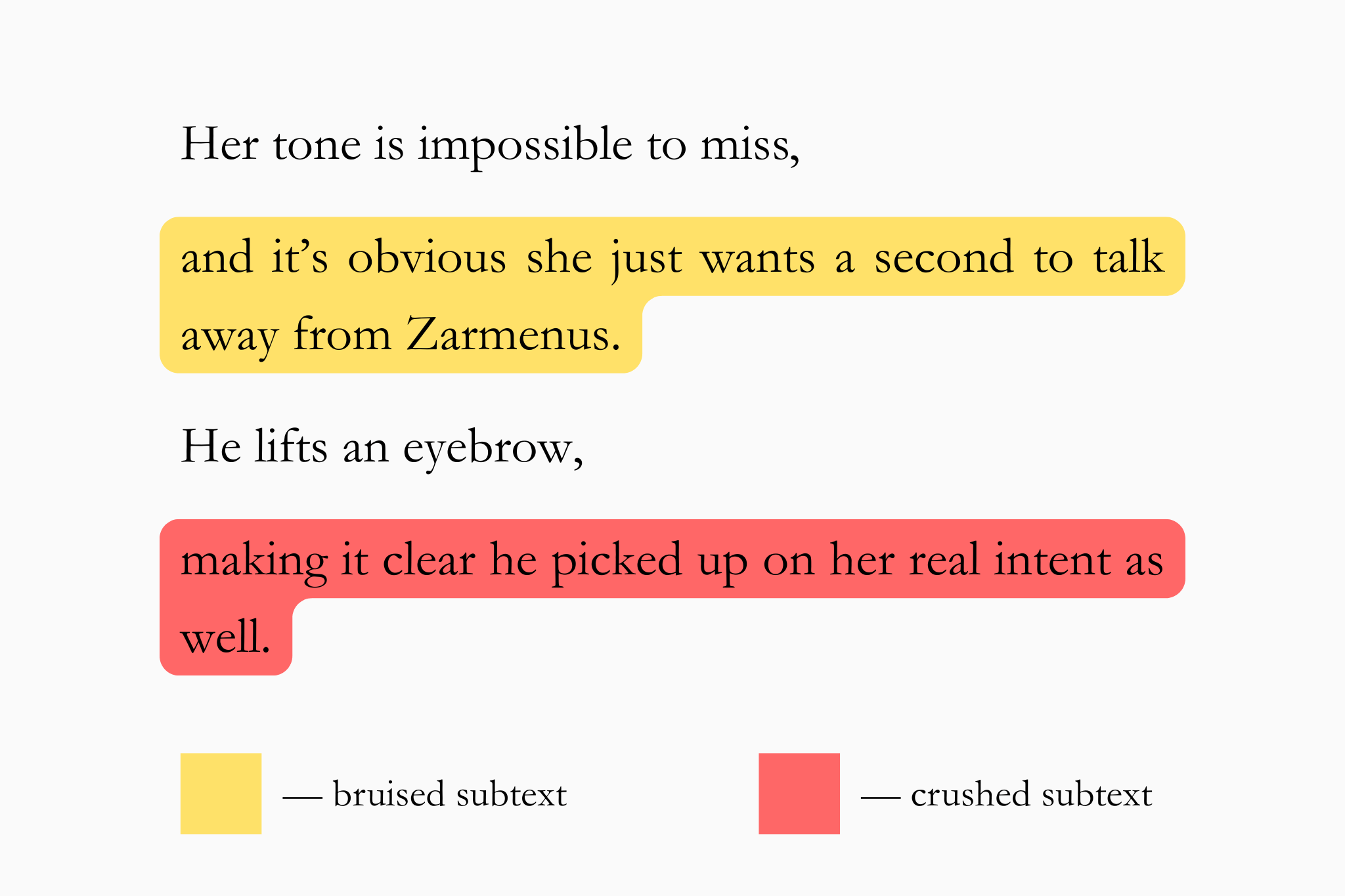
With everything laid out so plainly on the page, there’s no incentive to interpret the characters the way we would others in real life. This makes them seem one-dimensional and the narrative self-dismissive.
Bodies Without Weight
At the same time, the story leaves too many gaps in spatial and physical detail, forcing verbal expression to operate separately from the body.
This is similar to working with a puzzle: if one piece is missing, it’s easy to fill in the gap, but with half of the image gone, the mind scrambles.
In a sense, this surface-level interaction leaves My Roommate from Hell at the storyboarding stage. For example, in “asks Tyrell as he eats a waffle fry,” we have no sense of either Tyrell’s tonal projection or the smells and textures shaping their reality.
Is the fry big or small, dry or greasy, delicious or only mildly satisfying? Without specific anchors, language floats free of sensation, and scenes begin to read like transcripts more than experiences.
This wouldn’t pose much of a problem if the break in detail were momentary rather than ongoing.
In a similar vein, placeholder phrasing frequently replaces genuine description:
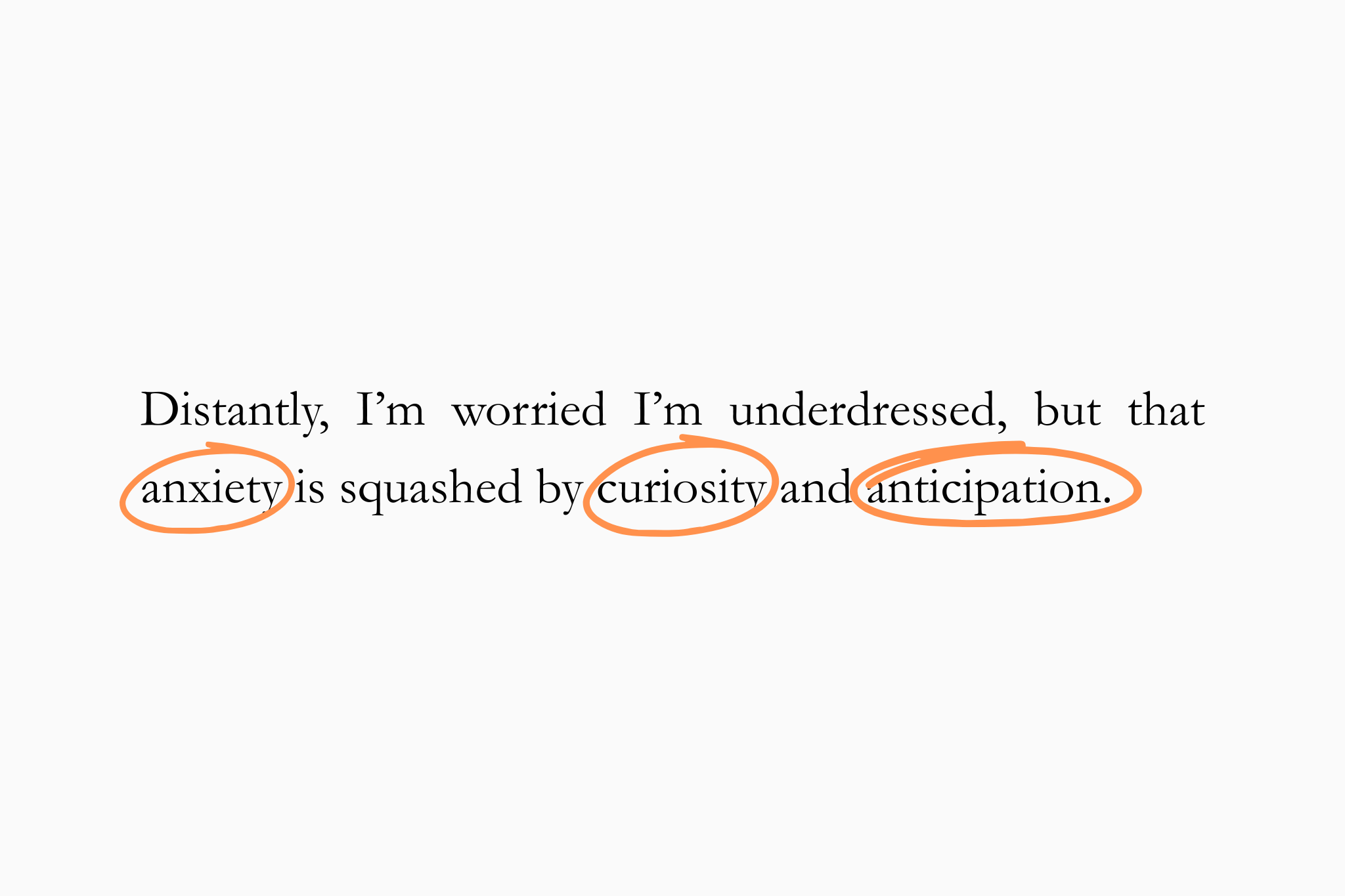
These lines suggest that something is happening internally, but they do so without allowing us to feel it.
How does Owen’s anxiety manifest? A tightness in his chest, an accelerated heartbeat? A dampness on his palms? How does it differ from his anticipation? How would curiosity reshape the fine muscles around his eyes?
It’s easy to forget that emotions, though universal, are usually experienced and expressed in starkly different ways. Left to its own devices, the mind draws on lived experience, but that can only take it so far.
If the reader finds the concepts too abstract, especially at an age that warrants a great deal of inexperience, then the story suffers from being flattened beyond resonance.
The Enemies-to-Lovers Arc
This lack of grounding mirrors the story’s broader absence of tension. Specifically, there’s no romantic friction between Owen and Zarmenus—just mild annoyance on Owen’s side. And for a story leaning so heavily on the enemies-to-lovers trope, this proves fatal.
While Zarmenus lacks self-awareness, he’s never mean-spirited. In fact, his cluelessness manifests almost exclusively as misdirected kindness.
By the halfway point, the prince of Hell has long shed what little snark he exuded in the first scene, transforming into a well-meaning young man whose greatest flaw is being vaguely inconsiderate.
As a result, he and Owen begin to blur, and as the bad-boy tension that should drive their dynamic fades, the narrative’s potential conflict turns into a flattening of character.
Sanitized Desire
Despite its college setting—and repeated references to pregnancy, alcohol, and sex—Zarmenus’ erotic life is consistently reduced to “making out,” with only hints of strewn clothing or heavy breathing.
This restraint feels more fearful than deliberate, especially given how often Zarmenus’ hookups are mentioned and how adamantly Owen insists he’s supportive of people living out their sexual lives fully.
His discomfort at being an unwilling witness to Zarmenus’ erotic life, the mechanics of which are heavily obscured, could have introduced conflicting bodily responses—mortification, curiosity, or unwelcome arousal—but the text refuses this complexity.
The queer characters within Owen’s circle feel similarly sanitized and formatted, presented as recognizable personality tropes that move with the predictability of established roles.
Through them, adult themes are invoked and immediately neutralized, leaving a faintly repressed quality.
We could argue that this is a young adult novel, and any deeper explorations of a teenager’s somatic responses might prove too jarring. But this argument is somewhat misaligned with the adult world within the story’s belly.
As things stand, the narrative would be far more rewarding if it confronted the staunch conviction that late adolescents are sexless beings by examining the relationship between hormonal shifts and lived experience.
Ultimately, as often as the text gestures toward mature contexts, its censoring feels unconvincing.
Brittle Foundations
The conceptual underpinnings don’t fare much better under scrutiny. The distinction between “humans” and “people” becomes confusing, particularly when demons refer to themselves as the latter:
“To show humans that we are good, honest people.”
On the surface, this might suggest that demons and humans exist on equal footing. But by conflating two vastly different worlds and value systems under a single label, the narrative blurs the lines in a way that feels more destabilizing than inclusive.
Similarly, the repeated emphasis on Owen’s prospective Google internship feels oddly disproportionate. The dean’s suggestion that Owen endure discomfort for the prospect of a future reward is treated as reasonable despite the clear power imbalance.
This sits uneasily alongside Owen’s own disdain for those he deems “nepo babies,” suggesting a lack of self-awareness that’s never resolved.
In fact, the story’s view of systems—education, success, power—remains strikingly naïve. Prestigious internships are treated as golden tickets, while people are sorted into neat moral categories.
Again, with a little reflection or probing subversion, the narrative could have been far more substantial.
The Mechanics of Conversation
Dialogue bears much of the narrative load, but mostly in the service of explanation, which makes it come across as over-articulated:
“You said that we’re boyfriends,” I say. “We’re not boyfriends. We’re not even dating!”
Crucially, Owen and Zarmenus tell each other exactly where they stand once deep in the mechanics of a fake relationship, leaving little room for tension or misalignment.
Inconsistent use of contractions further disrupts the rhythm, especially when emphasis isn’t clearly intended. Most problematic is the reliance on perfunctory verbs, which flatten the already static exchanges:
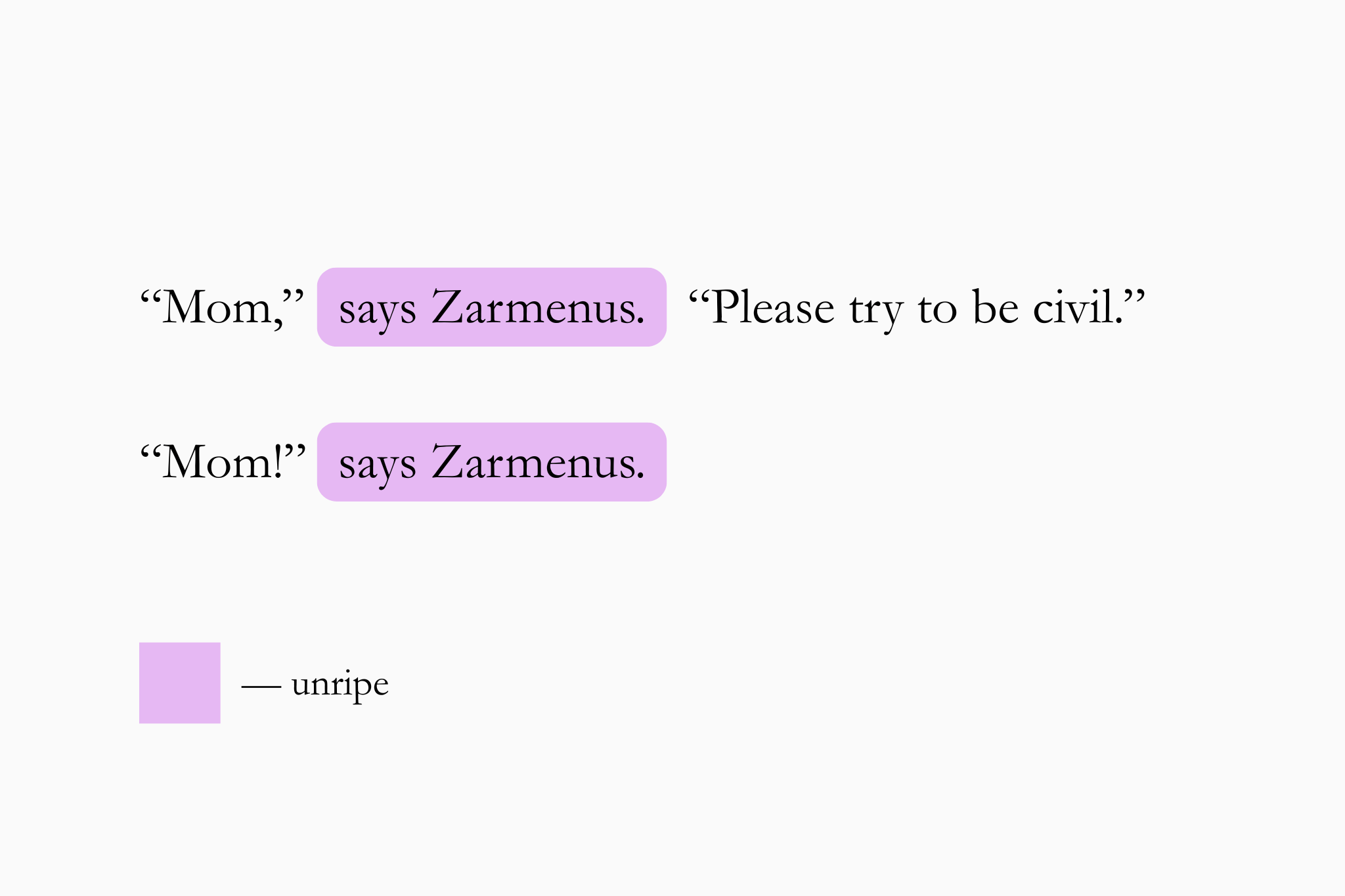
or
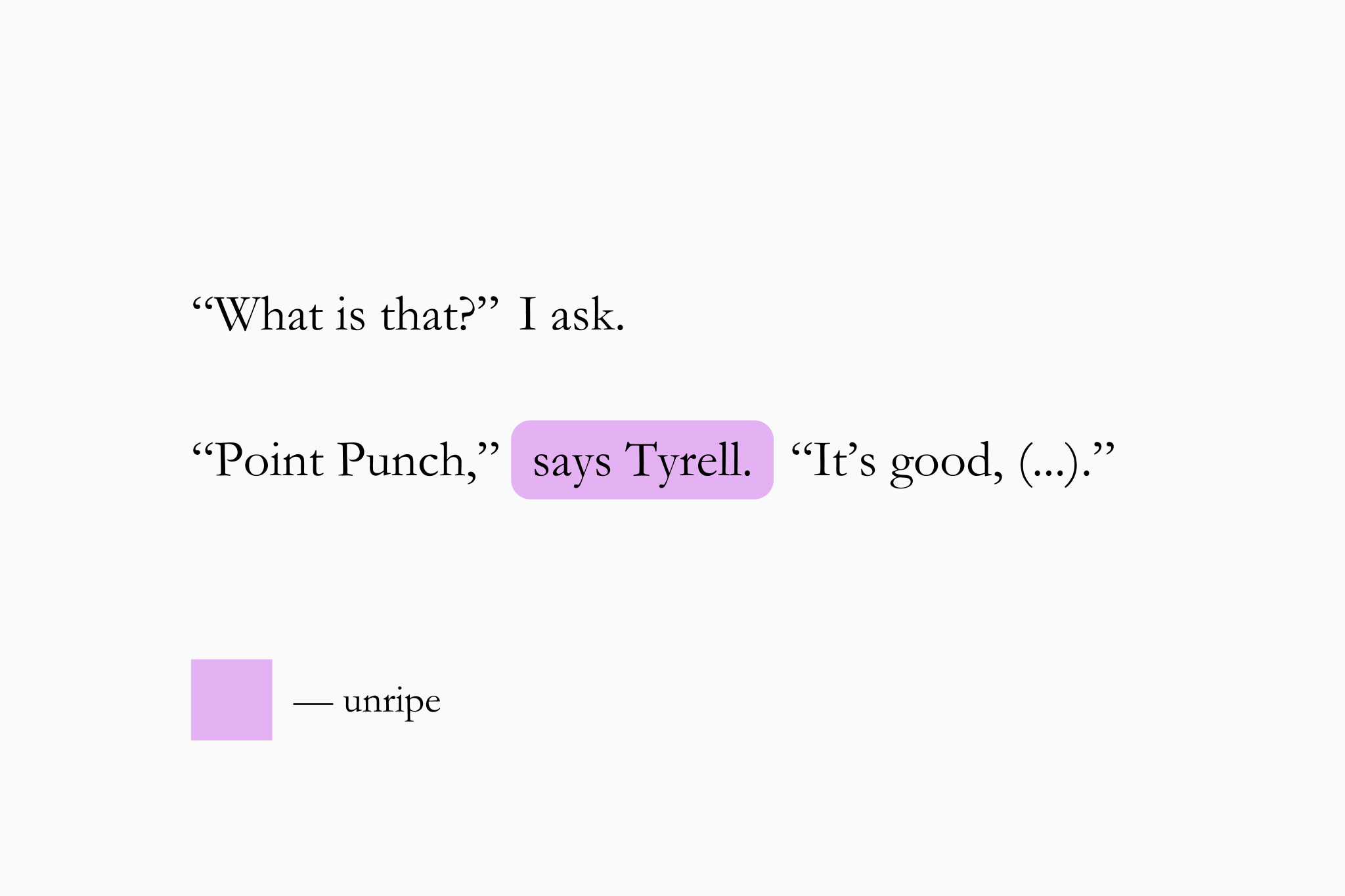
The verb “says” tells us nothing about tone or potential body language. Unless marking a shift in speaker, the verb is largely redundant.
Yes, we could argue that it hints at Hemingwayean simplicity, but for that to be true, a restrained plainness of poetics would need to follow.
Editing issues compound the problem. Syntax slips and comma splices pull attention back to the surface, leaving us unable to puncture the world beyond the letters on the page.
Orchestrated to the End
There are flashes of humor that hint at a sharper, stranger story—often involving Hell’s creatures intruding on Owen’s consciousness. Lines like “The wolf butler creature follows us, licking its lips each time I look at him” work precisely because they’re not overexplained, floating on the page like a wink.
Unfortunately, the climax retreats into caution. Stakes are raised, then immediately offset. Violence is described, then softened, often in ways that break the fourth wall.
At one point, Owen notes that “Nobody has been killed, but they’ve all been knocked out,” despite having no way of knowing this from his limited, non-omniscient perspective.
This reassurance not only breaks immersion but also frustrates with its pruning platitudes.
By the end, My Roommate from Hell feels far more orchestrated than lived-in. Plot points align too neatly. Characters recover from drunkenness at convenient speeds to overhear damning whispers behind closed doors.
Everything functions, but nothing truly works. While the work’s ambition is clear, its persistent refusal to let the story become uncomfortable, messy, or embodied inevitably leads to disappointment.
And while it means to be generous and affirming, it never trusts itself—or us—enough to let that generosity carry any weight.