

Breakdown: 'Calypso's Guest' by Andrew Sean Greer
A study in narrative poise
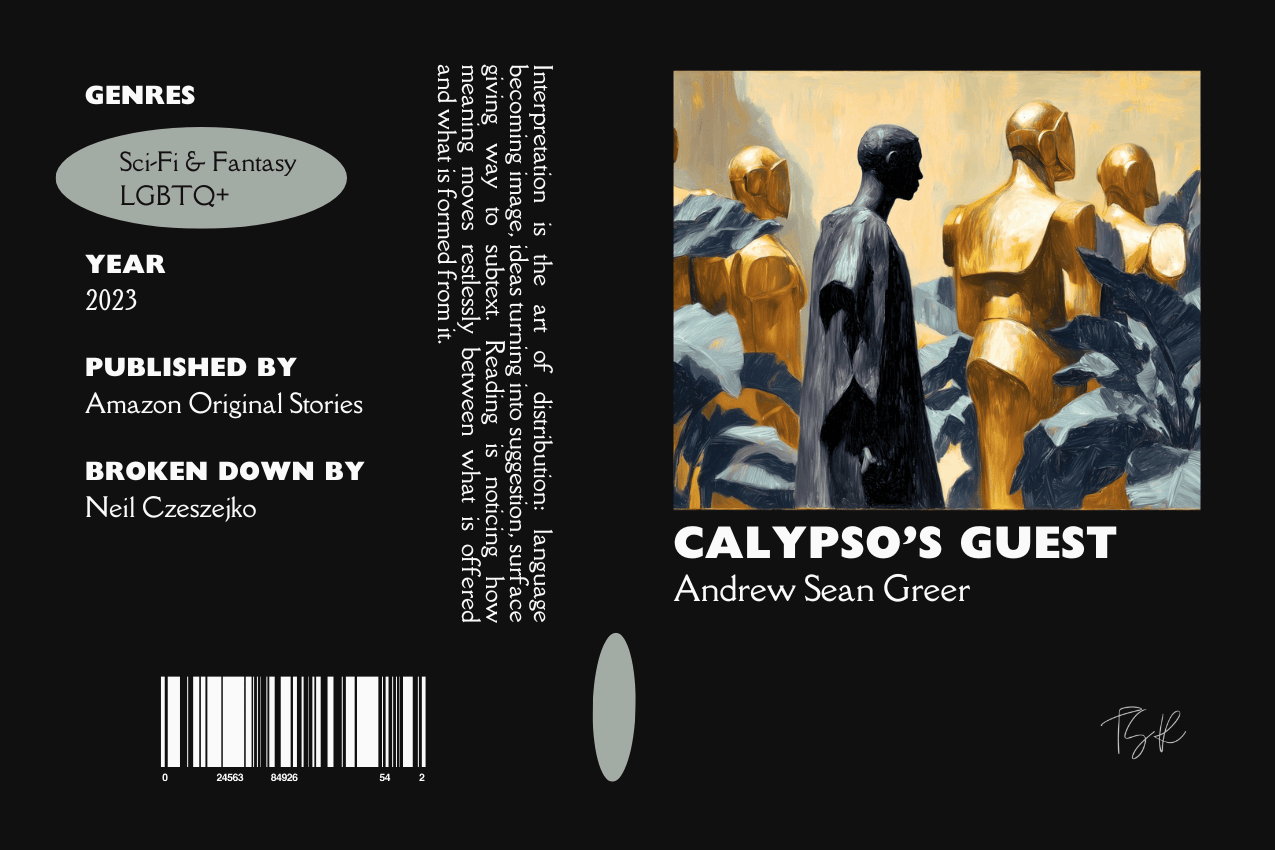
Calypso’s Guest (2023) demonstrates remarkable narrative poise. The short story fits stretches of planetary logic inside the body of a legend, drawing emotion from a command over its motions.
Greer’s tale splits from the ancient myth by following an immortal exiled to Calypso, a faraway planet where mechanical servants are bade to follow his every command—save one: to provide a means of escape.
The man’s quiet existence turns deafening only when a survivor crash-lands near his home, setting into motion aches as yet unknown.
From the outset, the story holds a fine melancholy, folding lived experience into nature’s quiet rhythms: “You live long enough, and almost everything fades in the sun except the patch where you are standing, isn’t that so?”
That delicate tonal state extends into moments where violence and grace are forced to collide, creating a thrilling dichotomy. Each image is weighted but willing, and always cutting: “(...) it had boiled the sand to glass, and lay in dunes like an ant in amber.”
Dialogue moves freely, at times unrestrained by quotation marks, with a cadence that feels spatially charged. Here, Greer’s control is notable: where the full reproduction of speech would likely fracture the story’s flow, narration glides in and takes over:
“A worker corrected me: the probability was one in ten million. ‘So you see.’”
These choices maintain the cradle of our focus, keeping us firmly within the story’s hold. And as the narrative settles, the immortal’s imprisonment begins to feel less mechanical than it first appeared. The servants deny him escape, but it never fully coalesces in his mind—never quite moving beyond abstraction.
He could follow his aging lover when the opportunity presents itself, but he doesn’t. The story’s tight focalization reflects that stillness. We stay where he stays. Containment, in turn, becomes a mode of attention.
Time and perspective are measured with similar care. The narrative shifts between the survivor’s interior consciousness and the margins where tragedy and distance are observed, though it repeatedly returns to its original point.
Time circles us, with exile registering spatially before being noted emotionally. Moments of attention are always calibrated to ambiguity, with gestures, glances, and conversation remaining deeply suggestive.
Solitude and the burden of consciousness resonate across these shifts, keeping the lover, forever referred to as “the visitor,” at a precise emotional and narrative distance.
Greer’s handling of this spatial and temporal tension—with his careful tracking of desire and the inevitability of separation—underscores the story’s poise, making emotion nearly imperceptible, though no less unbearable:
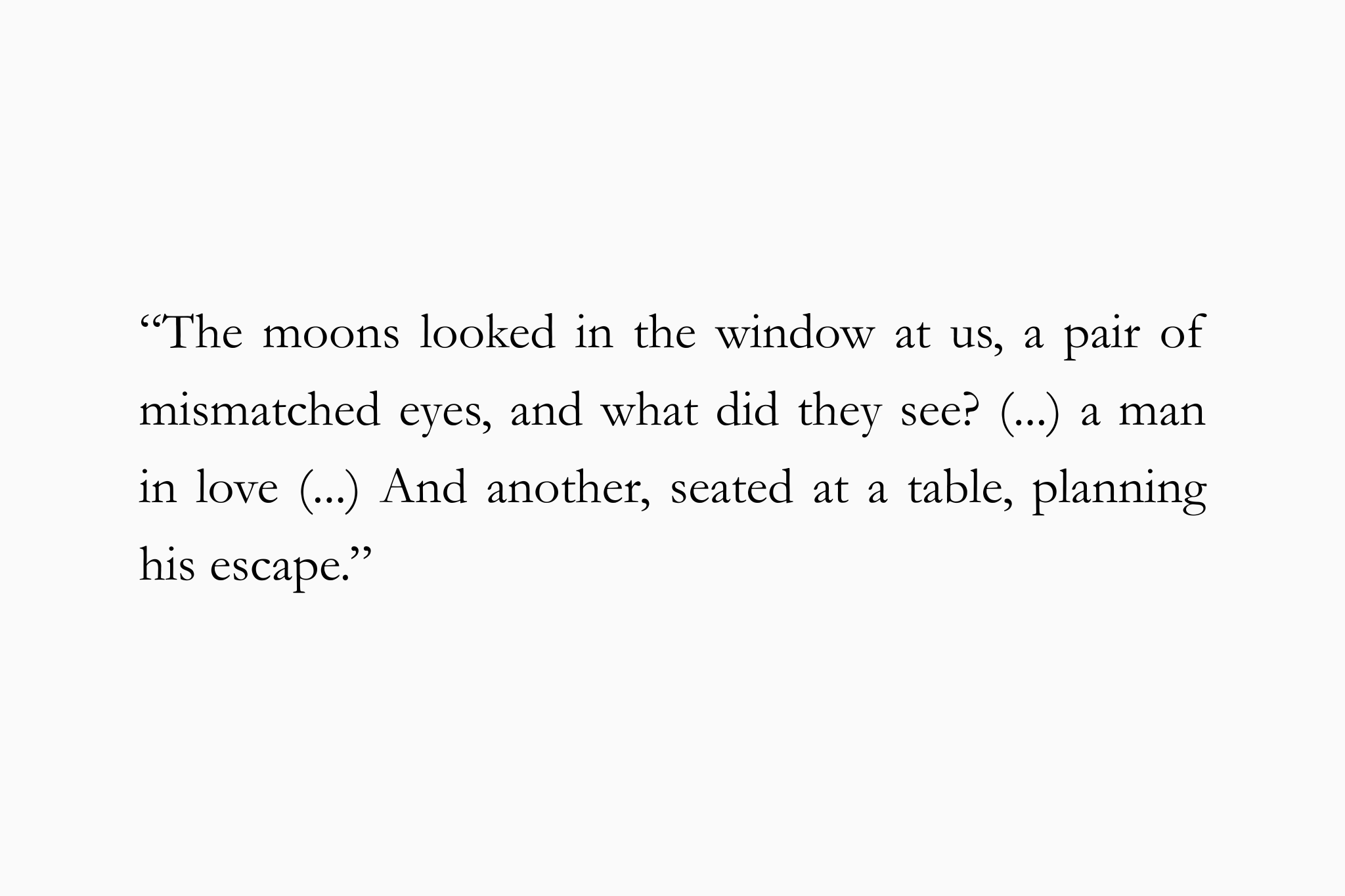
The mythic breadth of immortality and planetary solitude is wonderfully sustained through his syntactic restraint.
Sentences hold themselves in check. Dialogue thins or slips partially into narration. Scenes steady where they might otherwise expand. The scale seems to remain intact precisely because language doesn’t strain to amplify it.
Similarly, fragility and pressure are interwoven, creating a soft hum of anguish: “One looks also at the sapling that will one day break the stone on which it grows.”
Even the protagonist’s torturous solitude is structured with deliberation:
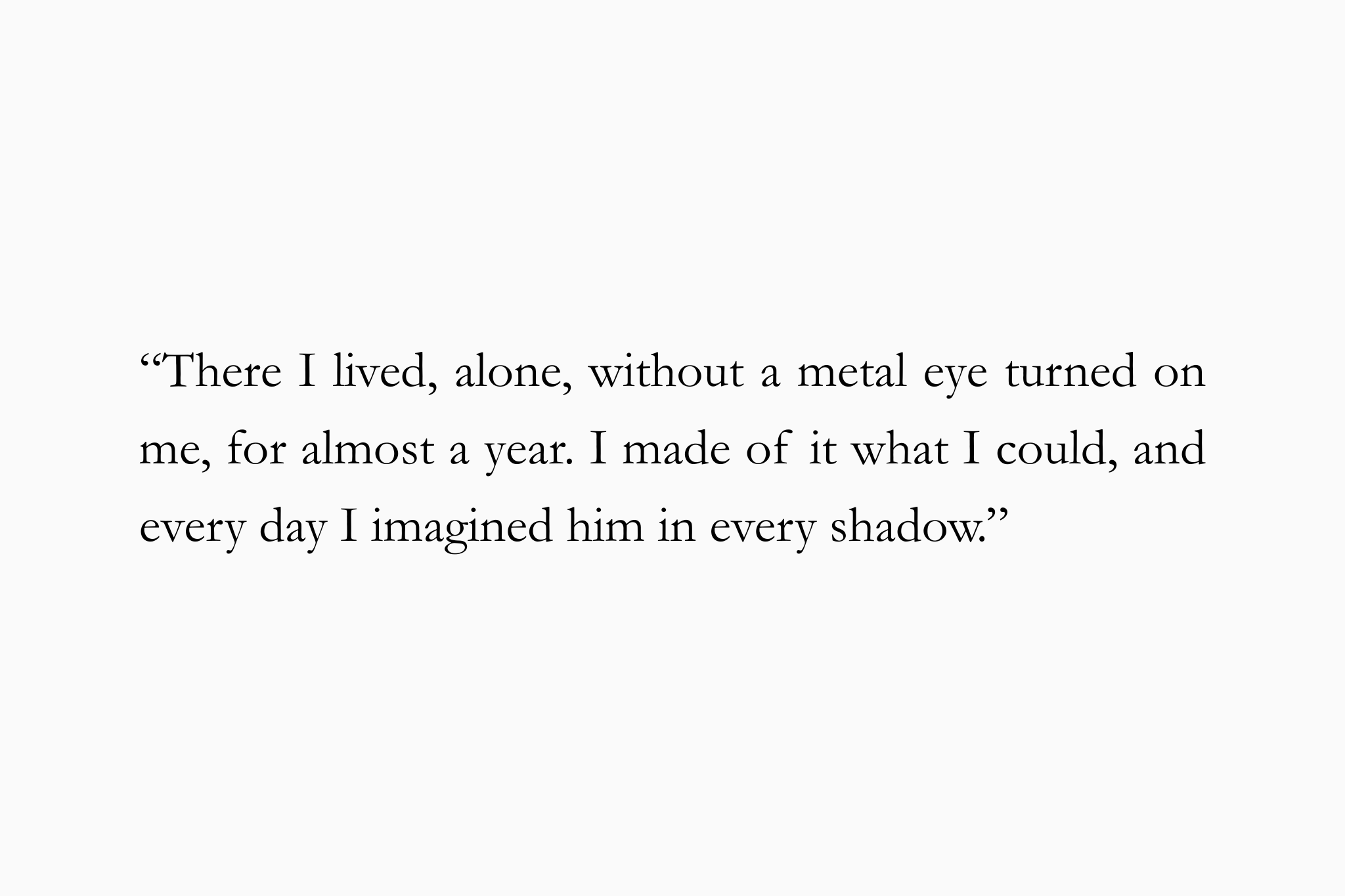
In its compression, Calypso’s Guest constructs a careful architecture of attention, in which temporal shifts, spatial perspective, and narrative voice stay measured and exact.
Mythic breadth and intimate detail develop together, with every gesture and pause carrying tension without excess. Through this restraint, the story maintains its position across presence and absence, allowing even the briefest of narratives to feel emotionally expansive.