

Artificial: What We Fear in Our Own Creations
The uncomfortable life of the conceived
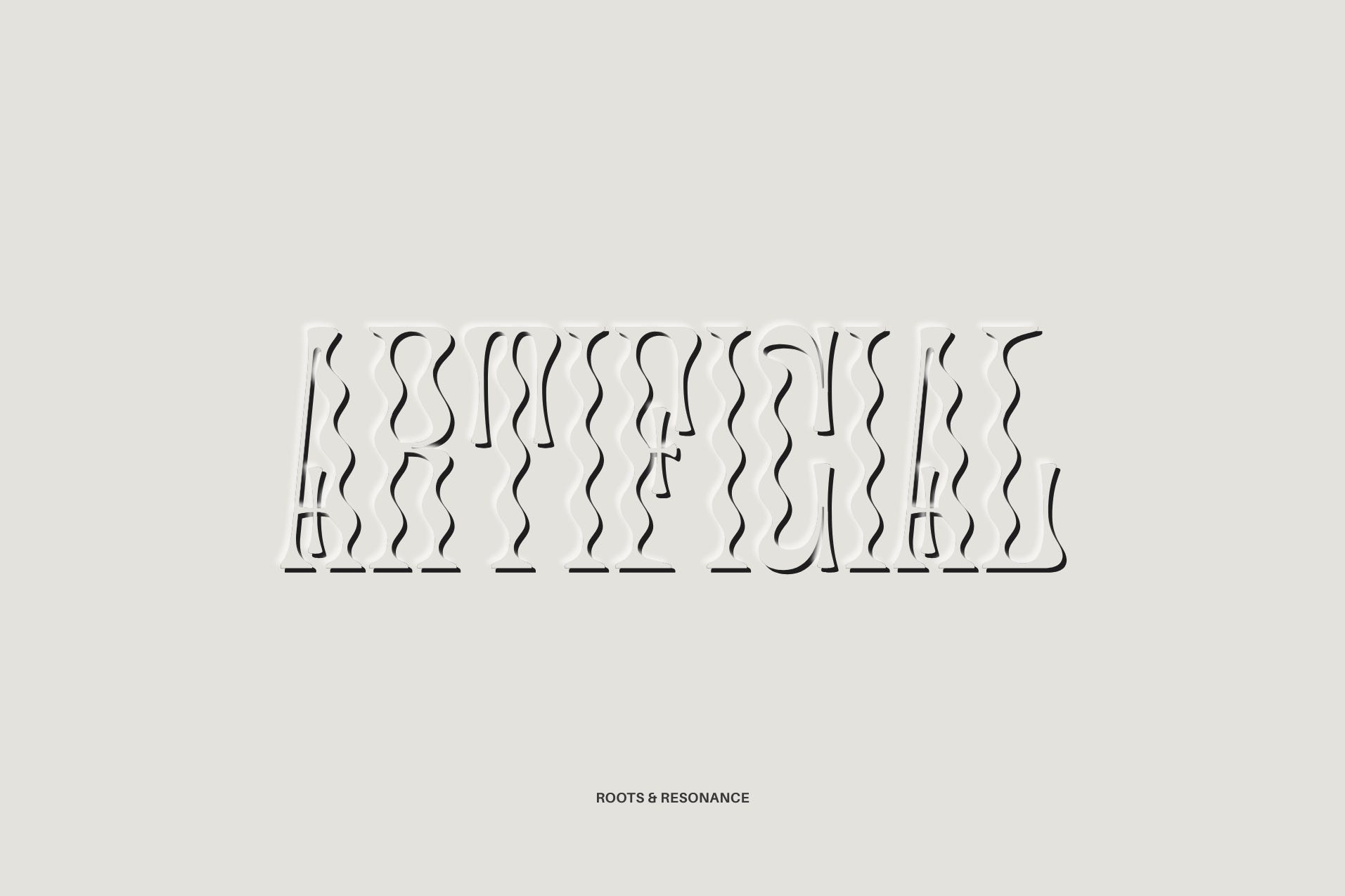
Artificial carries layers of meaning. It began as a word for the products of human skill, but gradually came to suggest imitation, substitution, or distance from the natural world.
Today, with tools of creation shaping ideas, intention and technique often overlap. Artificial no longer feels simple, holding a richness born from both craft and reflection—from what we make and how we see it.
artificial
Etymological Drift
Latin: from artificialis—“of or belonging to art,” from artificium—“a work of art; skill; system”
Middle English (late 14th century): made or produced by humans, as opposed to naturally occurring
Early Modern English (late 16th century): extended toward imitation and substitution (artificial flowers, light, teeth), with figurative meanings of “fictitious” or “insincere” emerging
Modern usage: a dual sense persists
neutral/ technical (engineered) and
skeptical/ negative (fake, unnatural, uncanny), especially in contemporary discourse around AI
The semantic path:
man-made → contrived → engineered/ synthetic/ uncanny
Meaning in Motion
The Uneasy Appeal of the Made
While artificial began as a practical word for the human-made, it also mirrored how societies negotiate the boundary between what is made and what is meant.
When industrialization accelerated the production of artificial dyes, sugar, and lighting, these innovations broadened access to everyday comforts—filling mouths, fabrics, and nights with new intensity—but they also disrupted older assumptions about authenticity and refinement.
Absence in Plain Sight
Gradually, this tension extended into more personal domains. Artificial flavors were convenient but judged inferior. Artificial flowers were decorative but hollow. Artificial smiles suggested performance rather than feeling.
Across these contexts, the word began to signal absence: something missing in origin, spontaneity, or lived texture. This sensitivity also shapes how people respond whenever mediation enters the creative process.
Mediated Hands
The advent of photography provides a historic parallel to this dynamic. In the early 19th century, painters worried about being replaced, perceiving mechanical reproduction as a threat to their craft.
But over time, society learned to distinguish technical skill from intentionality, recognizing that photography, though machine-mediated, could convey purpose, interpretation, and artistic sensibility.
The concern was always about more than technique; it was about whether meaning could survive an artificial process.
Suspicion, Repeating Itself
Today, this interpretive challenge appears across many forms of machine-assisted and algorithmic work, though it’s not unique to the digital age.
Whenever new tools take over part of the labor—such as mechanical looms, automated typesetting, or digital editing software—audiences often focus more on how something was made than on why.
In short, the artificial aspect becomes a point of tension because intention is less immediately legible.
Sculpting the Unseen
What makes the present moment unique is that artificial methods now do more than replicate materials; they help shape ideas.
A creator using algorithmic tools can turn ekphrastic language—words that vividly paint scenes—into imagery, shaping not just the prompt but the intent behind each act of selection, erasure, redirection, and framing.
These interventions don’t happen after the fact. In many ways, they’re the work itself. The process becomes less about summoning an image and more about sculpting a field of meaning in which the image is allowed to appear.
Hands at the Helm
This isn’t limited to visual creation. Artificial systems now assist in composition, editing, sound design, research, translation, and so on, but in every domain, the human mind still shapes rhythm and direction.
For example, in sound design, AI can generate novel textures, suggest tonal variations, or combine timbres in unexpected ways. But it’s still the human ear that decides timing, layering, and emotional impact.
The tools respond, but the creative architecture remains anchored in a mind that senses what’s present, absent, hollow, or excessive. And so, the artificial doesn’t generate meaning so much as create pressure around it.
This form of creative labor is naturally much quieter than a brushstroke or a carved surface, and audiences used to equating authenticity with visible effort struggle to recognize it.
The result is a subtle estrangement: a work can feel impressive and emotionally resonant, but the path of its becoming remains elusive.
The Search for Absence
This estrangement helps explain why AI-assisted work often elicits contempt; the artificial component draws attention away from intention and toward mechanism.
Viewers are left unsure how to read the origin of the piece, or how much weight to give the human input. This echoes earlier reactions to artificial substitutes: reluctant acceptance mixed with uncertainty about what has been lost in the process.
Bound by Cultural Anxiety
At the same time, artificial methods often invite creators to think differently about intention itself. Throughout history, new tools have shifted the balance between technique and conceptual framing.
Artificial dyes changed how color could be used. Artificial sweeteners made certain foods accessible to those with specific metabolic conditions. Cameras changed which moments could be captured.
These examples share a subtle tension: the artificial is met with suspicion, but it enables experiences, skills, and access that would otherwise be impossible.
This tension mirrors broader cultural anxieties about what is made, mediated, or substituted, asking us to reconsider what we value in the human experience.
The Quiet Strain of Evolution
While algorithmic tools change how ideas can be generated and assembled, they act less as replacements for human intention than as partners or constraints that provoke new choices and techniques.
The artificial element becomes a space where intention has to be articulated more clearly, even if it’s less immediately visible.
A Narrative in the Making
Across all these moments, the persisting question is more cultural than technological. When something is artificial, what exactly do we believe is missing? And how does that belief shape our response to experiences that are partly machine-made?
Subtextual Question
If the line between what is made and what is meant blurs, where does intention live, and how do we construct it in a world we deem artificial?